Performance
Acting
A good way of storytelling is getting an audience on the edge of their seat going, “Oh my God, what's going on? What's going to happen next?”
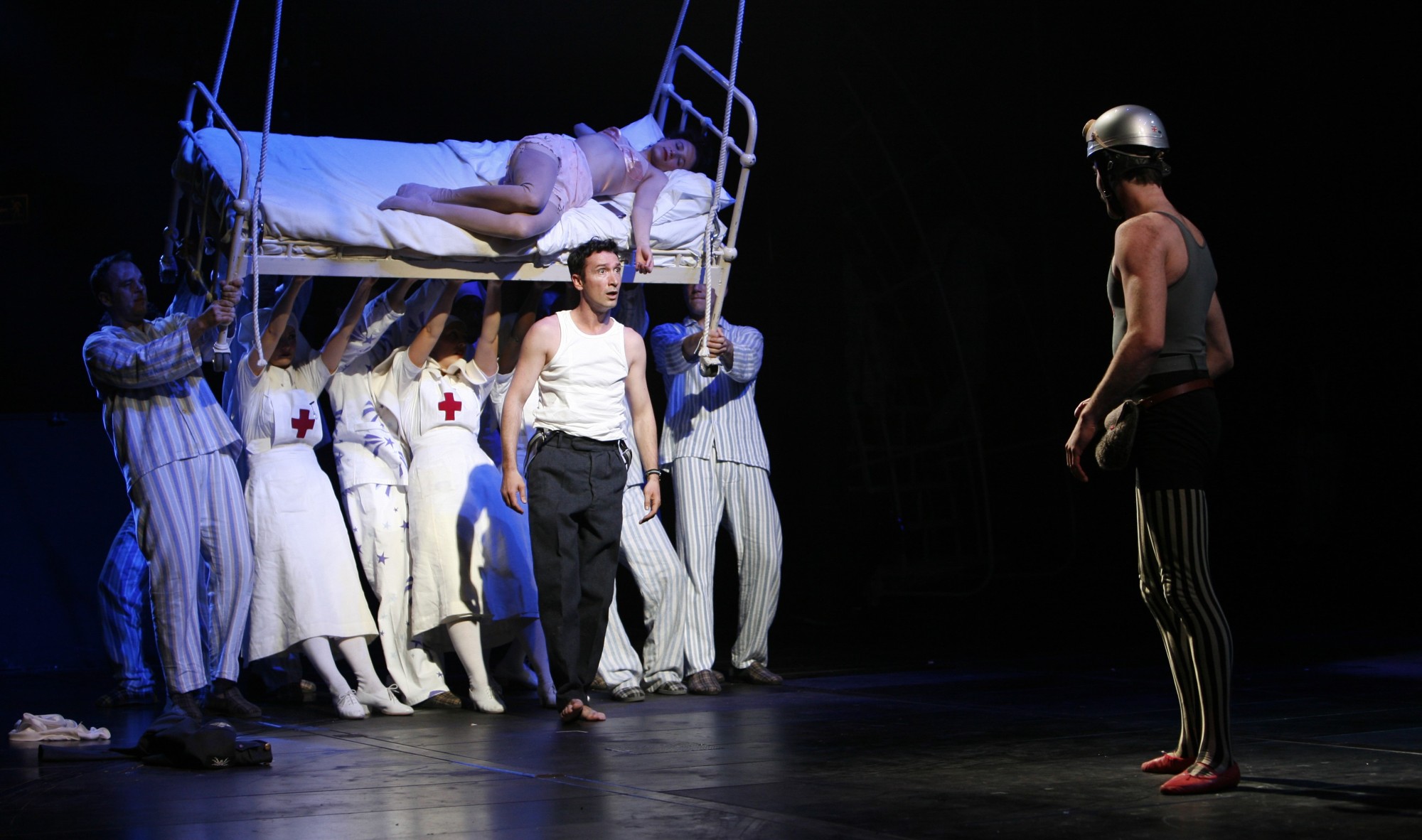
You can’t rest on what you know, and you can't relax into research. You're sort of dancing at the edge of a precipice all the time, which is what Kneehigh felt like. Kneehigh do no research. There is no psychology. There is no discussion about why, or attempts to piece together any dots of a character’s background. As Nick Darke and Mike (Shepherd) always used to say, everybody's capable of everything.
I remember Mike Shepherd telling me that when you’re working outside, an actor is like a light. If all of the actors are looking at one actor who's in focus at a given moment, that's about the ensemble understanding the story they're telling, beat by beat. An audience will learn from the company where the focus is just as in an indoor theatre, you put a light on someone and the audience will look at them: but it's a much more interesting kind of light, if it's about the attention of the ensemble connecting with the attention of the audience. I've used that in every piece of work I've ever made.
Dance and movement
In the Studio 18: Music to encourage dance
Use music, create playlists and encourage dance!
For those reticent to dance… hoodwink them eg: everyone have a paper plate, be a waiter, keep holding the plate as if it has food on it, can you turn it around your own arm, can you have two plates? Use different levels, incorporate music. Have a skip, try mirroring,specific dance moves i.e a sand dance (show them Wilson Keppel and Betty!) Falling off a log, hip hop, skating, ballet, northern soul, Bollywood, jitterbug, floss, capoeira etc !
In a circle, everyone has a satsuma or a potato. Play the music you want to dance to. Where’s the point to start the moves? Throw the satsuma from the right to left hand and back again, add other moves i.e under each leg, spin around then pass to the person on your left..keep going to the music.. a dance routine emerges.
I believe that once the body is energised and the blood is oxygenated then creativity comes to the fore.
Puppetry
Puppeteer and puppetry director Sarah Wright has worked on numerous Kneehigh shows. Here she gives some guidelines for directing puppetry in a piece of theatre:
- Puppets can create pictures on stage. Think about creating a graphic novel where each still image tells a story. You can position puppets on the stage with actors to tell visual stories before a word is said...
- Direct the puppet as you would an actor - so everyone on stage can see that the puppet is part of the play as they are.
- Puppeteers should be looking at their puppet at all times, not at the other actors! We want the audience’s gaze to be deflected from puppeteer to the puppet.
Puppets can perform different functions:
The depiction of a character that is difficult for an actor to play, for example: The forest birds in Tristan and Ysuelt; Tips the cat in 946: The Amazing Story of Adolphus Tips; the babies in Dead Dog in a Suitcase.
They can also be a powerful imaginary or mythical character, such as the Narrator rabbits in Hansel and Gretel; a child that can never grow up like Oskar in Tin Drum, and Punch, bringer of chaos, in Dead Dog in a Suitcase.
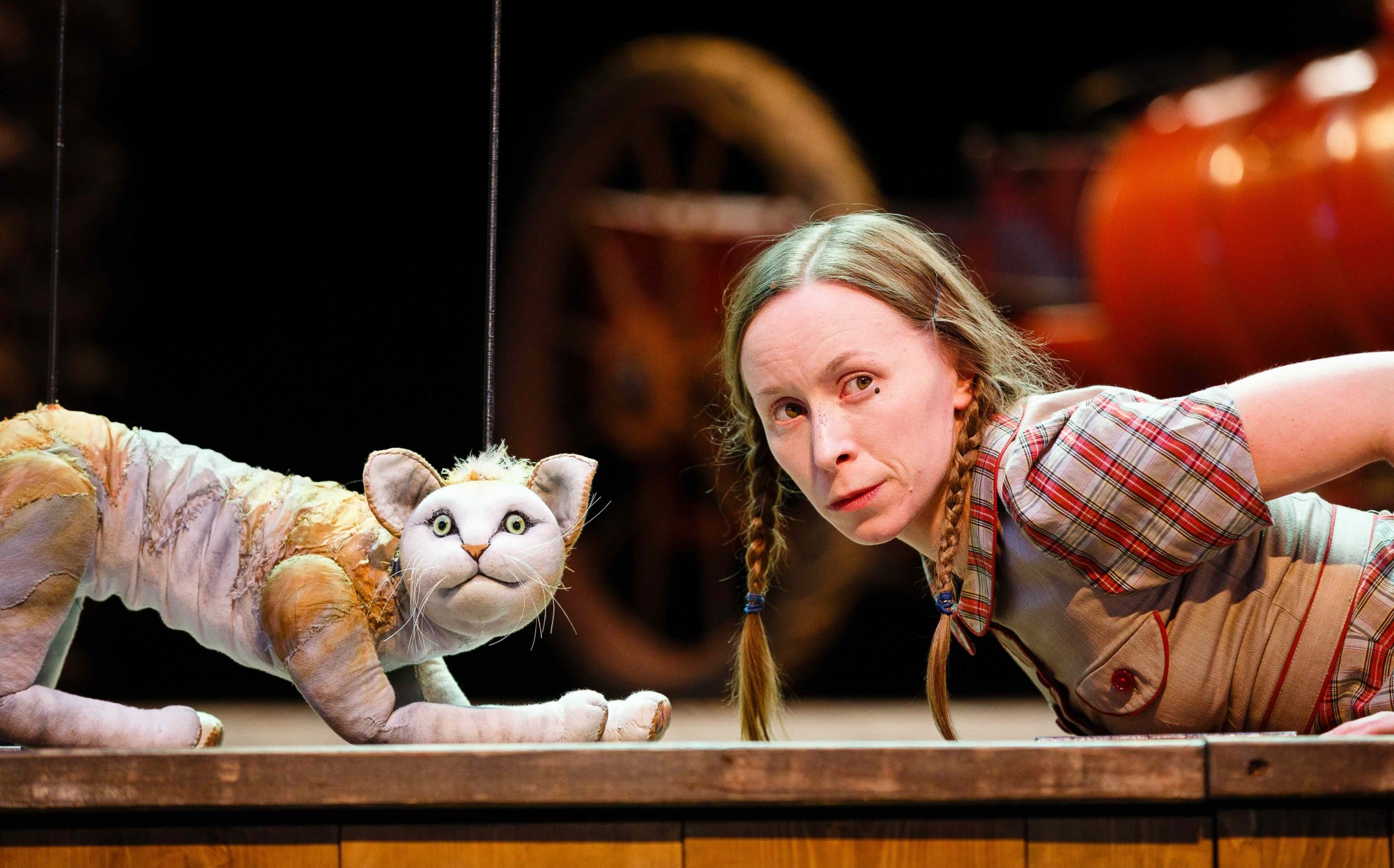
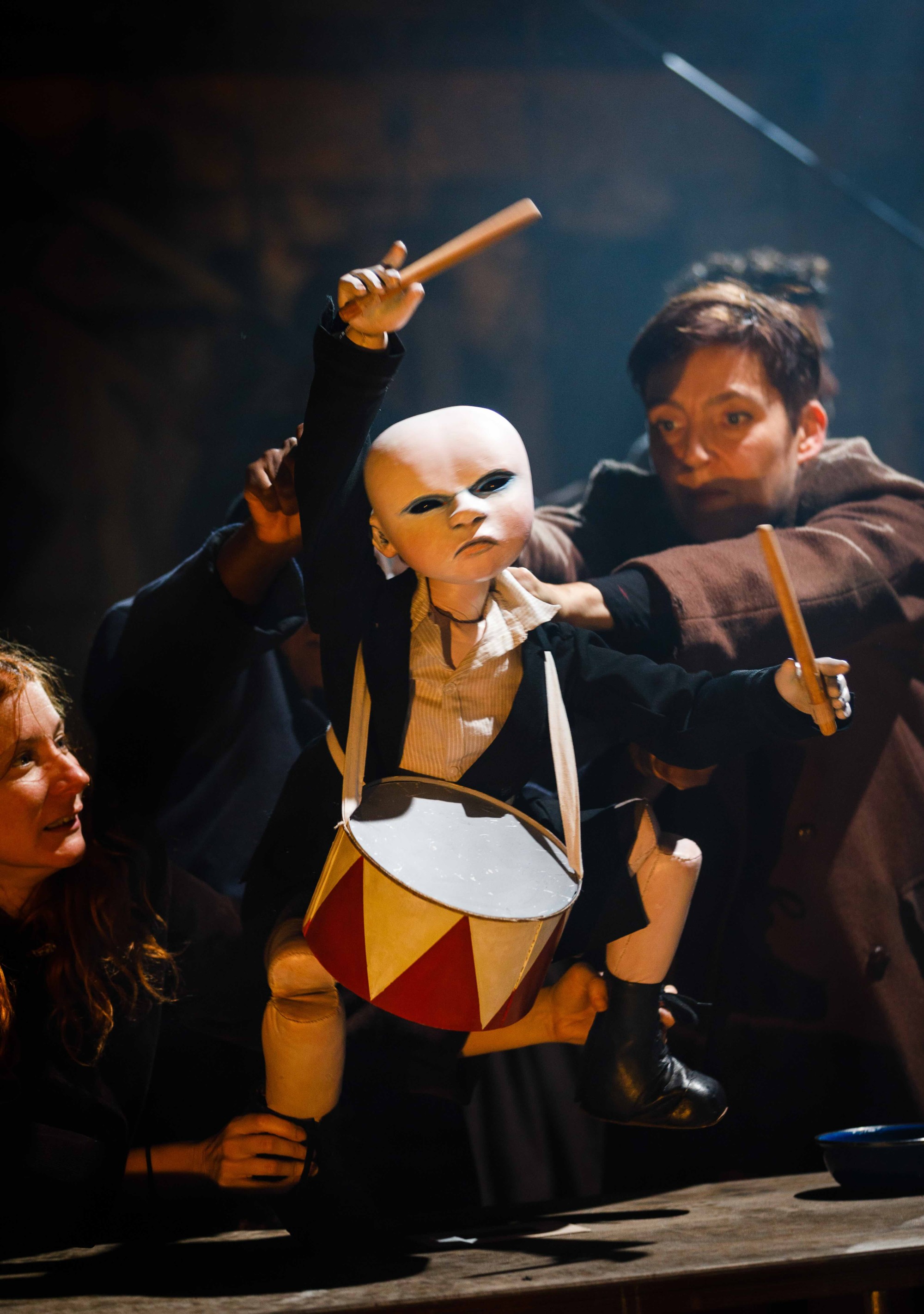
If you're making a piece of theatre, you're asking the audience to engage their imagination anyway. A puppet is part of the imagined world created by the performance. A puppet guides our imagination and lets us into that world. We're storytellers. A puppet is play and a puppet is make-believe. It's a vital part of creating an imaginary space, and what can happen in that imaginary space. We're not trying to replicate real life. We're telling stories.
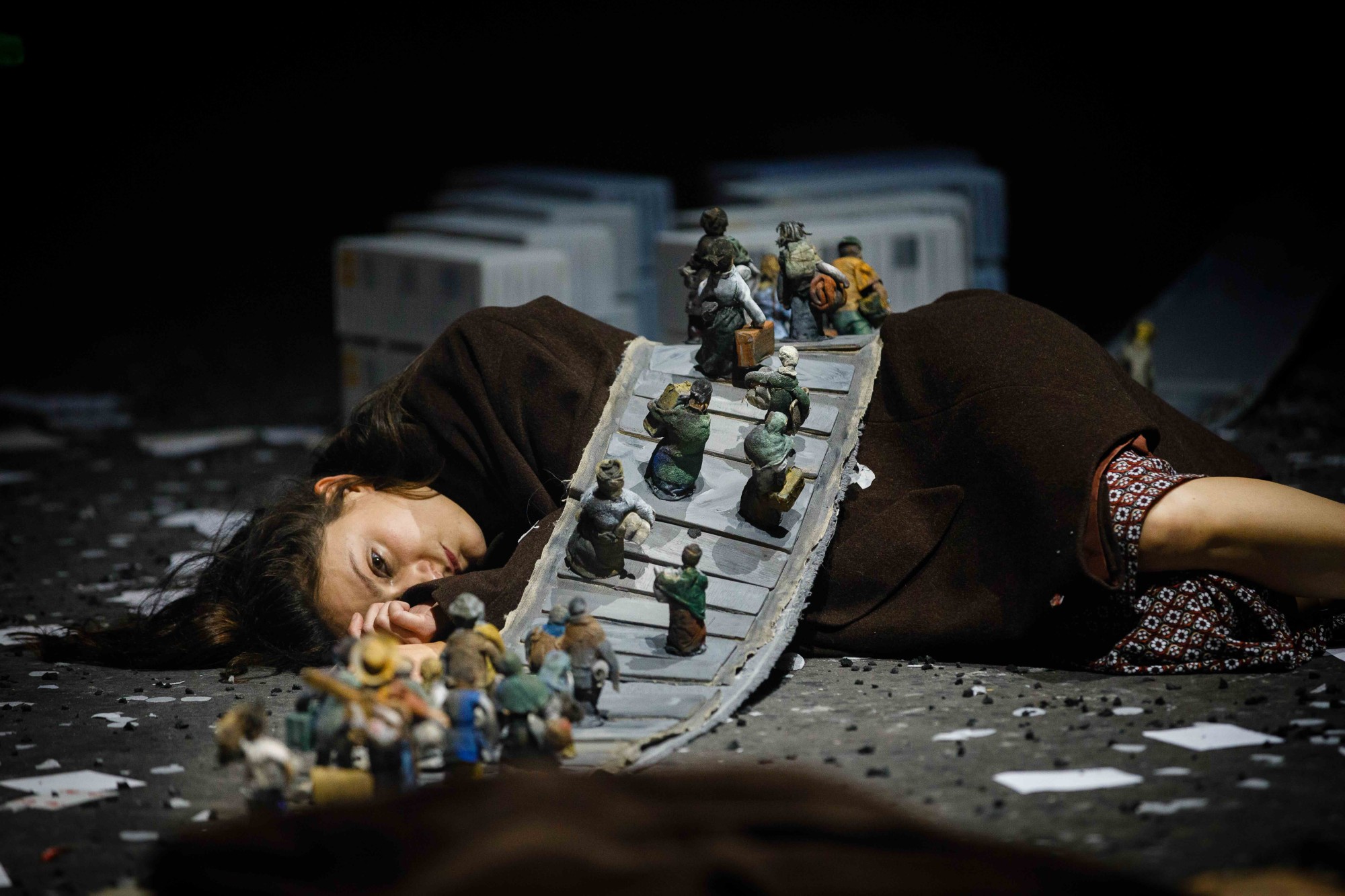
One technique used by Kneehigh, and by Emma Rice in her subsequent work, is what they call the ‘Miniature Worlds’ technique. Smaller versions of setting, such as houses, a boat, a sun, are manipulated and animated on stage to introduce the audience to the world of the play: like a wide shot in a film that then eventually focuses in on more detail. Once that’s established, the actors, and other puppets if appropriate, will take over the storytelling.
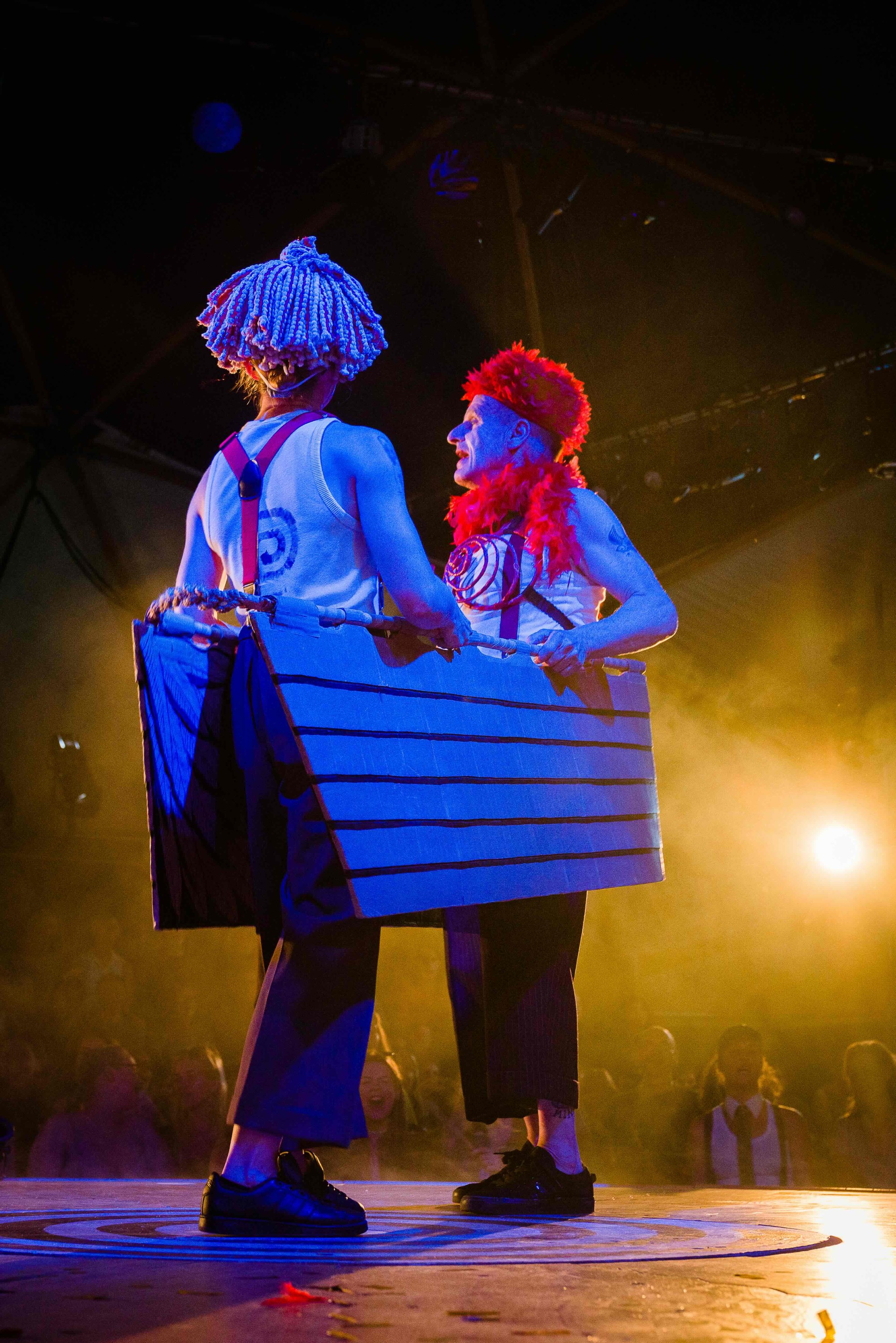
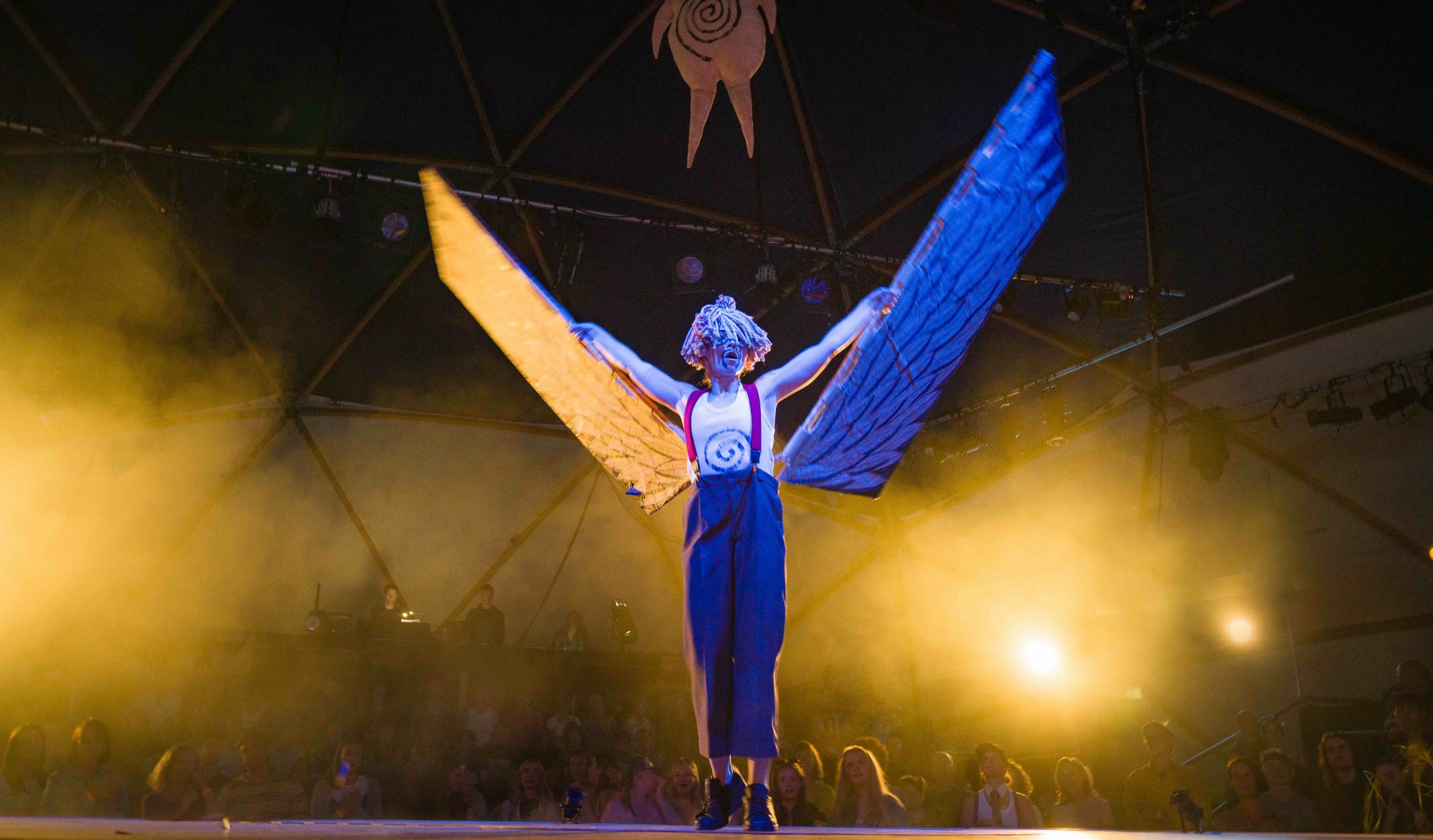
In Ubu, Ma and Pa Ubu sail away in a boat. The boat is one of my favourite props ever. It's two flat bits of cardboard on two poles that are folded around Ma and Pa and it just looks like the flat side of a boat. There's then a moment where Ubu breaks out of the boat, and the sides of the boat become wings. She's suddenly got two massive cardboard wings. The wings are created from the boat. So there's no puppet, but the puppetry in that moment is absolutely brilliant. One minute you've got a very simple, cut out cardboard boat, and the next minute, there are wings and that boat has taken you to the clouds.
Puppetry can help the devising process even when you won’t necessarily have puppets in your piece of theatre.
In terms of a process for the baby puppets in Dead Dog in a Suitcase was that Sarah and Lyndie (Wright) whipped up some prototypes which were brilliant, and we just spent an afternoon playing with them. That informed so much of the actual writing and what the babies did and how they spoke and how they sang. That's always a really fun thing to do, before rehearsals even begin: Just have some prototypes and play.
If you're testing a story out, you might make a shadow play of it. This is a great thing for teachers and for students, because a shadow play is a play without words. You're making a storyboard, but you're using a shadow play to do it. If you can tell the story through shadow puppets, you know you can turn it out in the outdoor landscape: it doesn't need explaining. In a classic shadow play, you don't have any text. You can use music and sound, but you don't tell the story, you show it.
Music
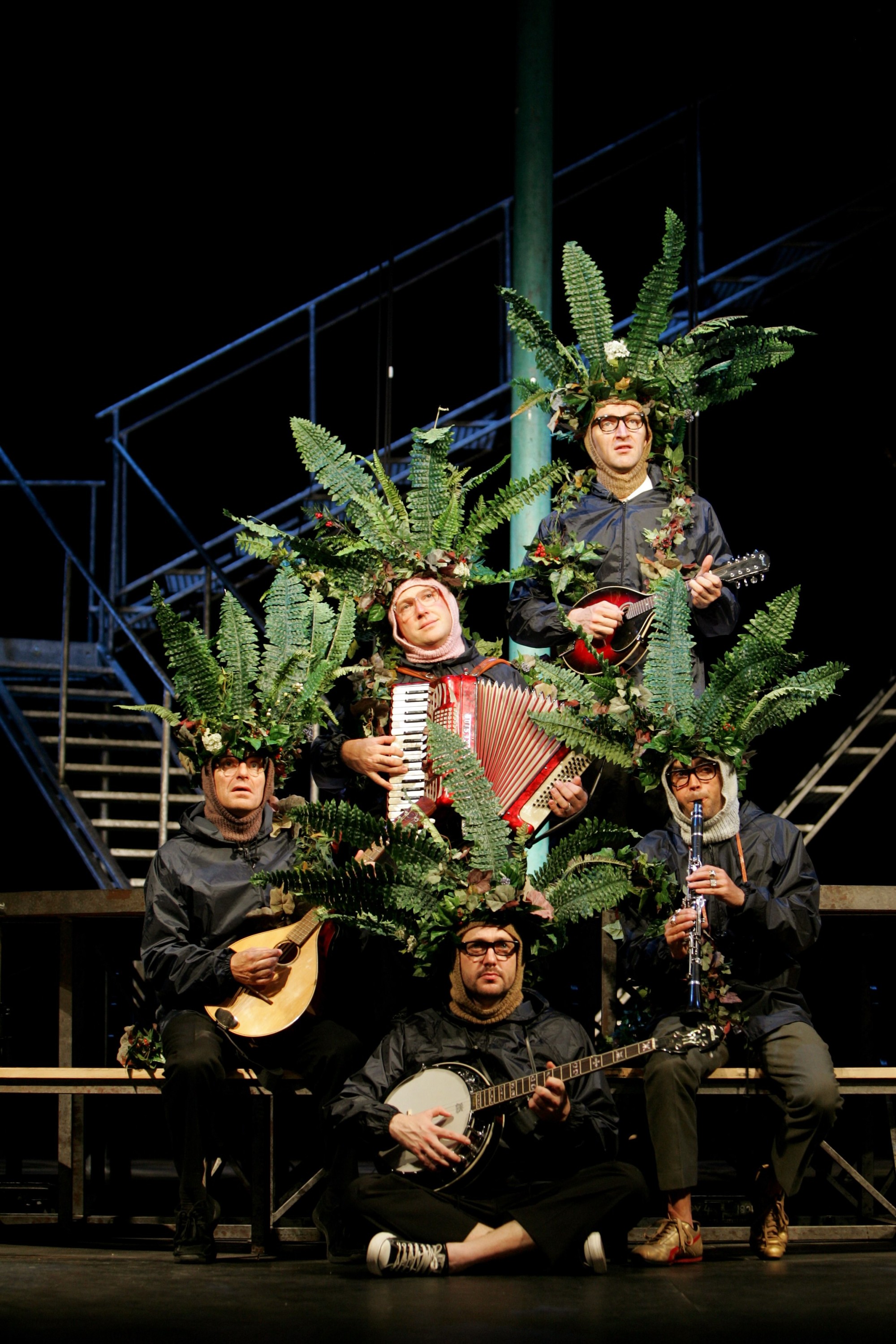
Mike says:
“I prefer to give music its place and to play it loud rather than have underscoring.
Composer Charles Hazlewood who worked with us on Dead dog in a Suitcase, Tin Drum and Ubu always wanted the music to drive the action.
We have always used music to tell the story as well as support the story.
Composers Jim Carey, Stu Barker and Ian Ross were brilliant, not just for the songs and music they wrote but for their engagement and understanding of the rehearsal and writing process which made the music integral to the action.”
Don’t labour your ideas. Ideas come easy and Emma always said that bad ones (ideas) usually take care of themselves (by dropping away). Be brave. Be present and respond. Be intellectual when you need to be but don’t overdo it, silliness can be the most poignant heartbreaker.