Devising is hard, it needs improvisation skills which take time to develop, it needs a generosity and, somehow, a joy of creation. It seems to be increasingly hard to keep fear and anxiety at bay but I believe that we have to strive to do so, as fear and anxiety thwart creativity.
Devising - Taking ideas for a hop, skip and a jump

In this section, Mike Shepherd explores devising - a process which he calls taking ideas for a hop, skip and a jump.
“Devised theatre? Is there a definition? A collaborative process where a theatrical work is created from scratch by a group of artists rather than relying on a pre-existing script, often involving improvisation and collective exploration of ideas.
Devised theatre emphasises team work and collaboration, with all members contributing to the creation of performance.
Both of these definitions are allied to the ways Kneehigh often worked but it’s not the whole story!
We always respected the individual artist within the collective and there were times where actors, artists, creative team worked collaboratively but then the specific skills of writers, designers, composers, directors were given autonomy to develop collective ideas without everyone “chipping in”.
More often than not we would arrive at a script as we developed ideas in rehearsal but not always! Galton and Simpson’s scripts for Steptoe and Son were a starting point alongside Emma Rice’s adaptation of the sitcom into a piece of theatre. Shakespeare’s script of Cymbeline was a starting point for Carl Grose’s adaptation alongside Michael Vale and Emma Rice’s design concepts. Design can lead the process - as can music, visual imagery and even lighting design. When creating Dead Dog in a Suitcase and Tin Drum, lighting designer Malcolm Rippeth, who is part of the creative process from day one, was a vital part of the process as we discovered the form and the way of staging the action and storytelling. In other words…
There is no formula, no set method but there are a strong set of shared beliefs which inform and fuel activity.
What do I do ?
I like to take ideas for a hop, skip and a jump. Ideas are everywhere, I don’t judge these ideas as good, bad or indifferent. I don’t analyse these ideas...I explore them.
There seems to be an increased pressure to have a ‘good’ idea which will then translate into a successful product. Don’t let having to have a good idea hamper your creative freedom.
Be inspired, find inspiration in people, places,simple interaction, the horizon,your online activity,your latest playlist (dance to it regularly) bookshelves, exhibitions, gigs,events etc..etc..inspiration is everywhere, ideas are everywhere.
I can devise completely from scratch, discovering themes, characters and opportunity but have rarely developed this into a show.
I suppose Blast (2007) is one of the closest examples of devised theatre I’ve done. My starting point for this show was the realisation that, as someone who had been brought up in Cornwall, I had been taught the English version of Cornish history and that the Cornish version of events was very different. I never knew, for example, that Cornwall had been the richest kingdom in the world, tin was more valuable than gold and Cornwall was at the centre of world trade routes. I never knew it had its own Parliament and the first university in the UK, the first steam-powered locomotive,wireless and satellite communications.I never knew about the raids on Cornwall ordered by Henry VII which destroyed the Parliament and University, the crack squads murdering rebellious Cornish and demanding the end of the Cornish language.
Cornwall has both led and changed the world with its resources and invention - not just a tourist destination with disgruntled “locals” who can no longer afford a roof over their heads.
I wanted to tell this story of Cornish history.
I wanted it to be angry and funny, I wanted it to be both informative and entertaining. Devising this show for village halls came at a time when it was expected that shows should be gentle and delightful . It was also a time where there was a significant increase in terrorism. I wanted it to be about the past and about now: the show we devised was daring, provocative and a bit outrageous but not gentle or particularly delightful! It became very popular but I wonder if we could make it now ?!
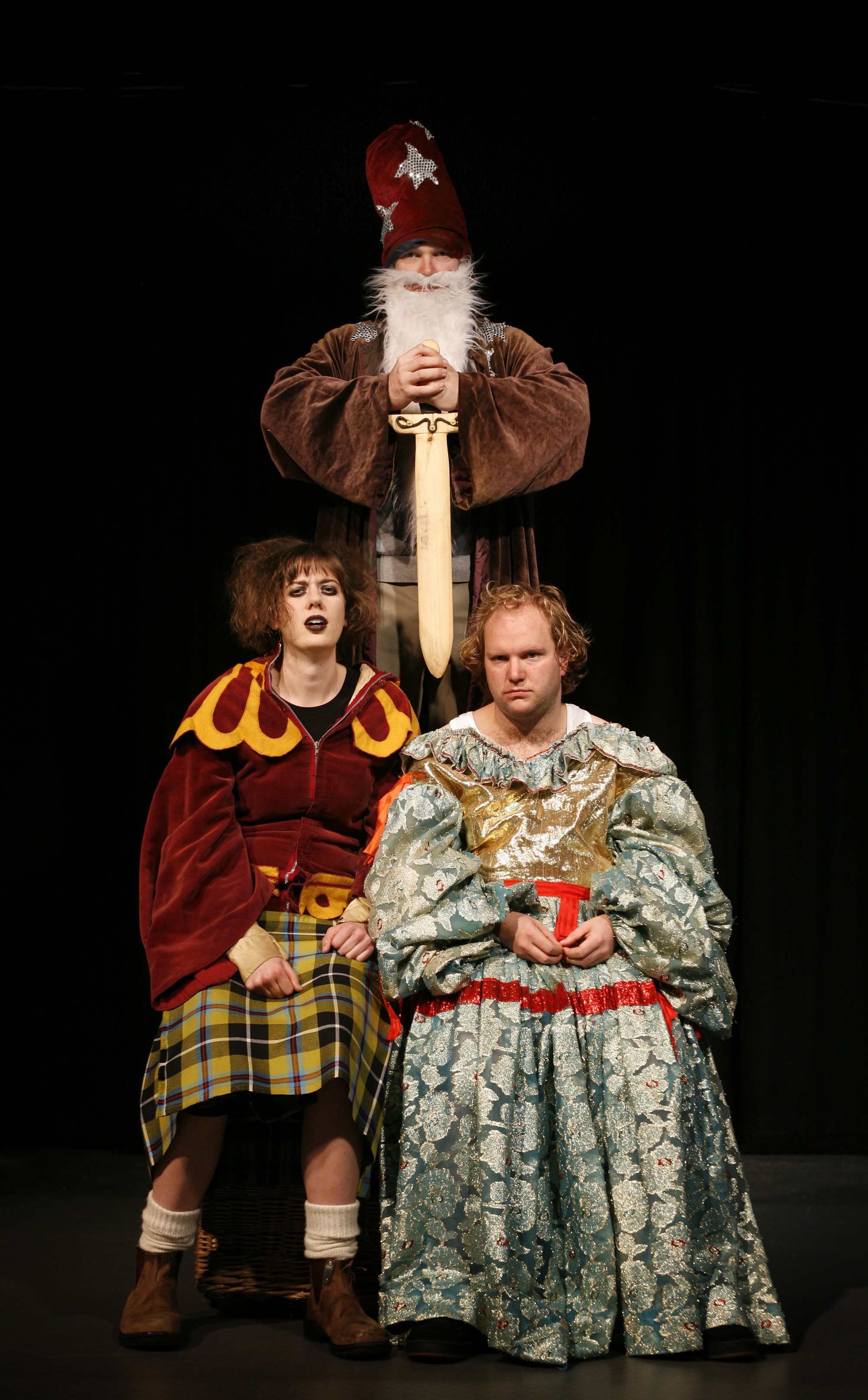
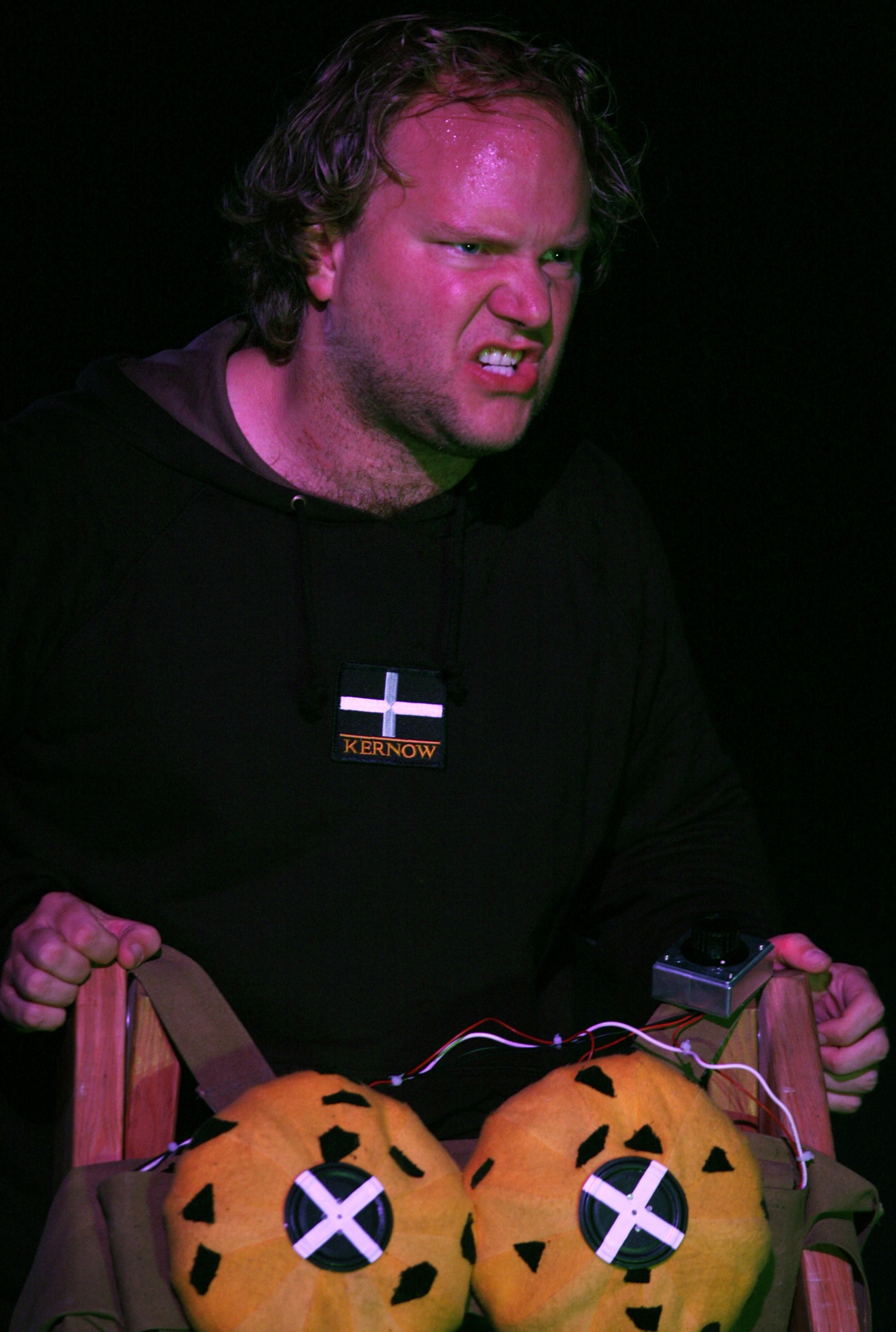
Blast featured Carl Grose and Kirsty Woodward as a kind of Sid and Nancy, or Romeo and Juliet. The pair are homeless and travelling when they arrive at the village hall where Colin Pickering, an incomer recently arrived in Cornwall with his wife Janet, is delivering a talk on the history of Cornish hedges. They kidnap him and announce to everyone that they’re going to blow themselves up in protest at what Cornwall has become. It’s a homemade explosive device which, when triggered, is mistakenly set to explode in 60 minutes rather than the planned 60 seconds. They lock the doors to the village hall while they tell the “true” history of Cornwall in 60 minutes.
In devising Blast we had a starting point which the skills of the performers took for a hop, skip and a jump through improvisation to develop a kind of map that could be crafted. We arrived at a flexible script through Carl’s brilliance.
Devised theatre needs strong directing where the director is also “writing” through structuring and developing the form.
In summary - the devised theatre definition above is only a part of the process we used to create theatre shows. Work with the collective imagination and work collaboratively but then let the individuals in the creative team fly with their individual brilliance. You also really need a director to pull together and craft the beast you’re likely to create!”
Devising from Scratch
Devising from “nothing” needs you to find starting points to begin with! Mike describes the process, inspired by Dorothy Heathcote and developed in Kneehigh’s own style.
“I liken it to swimming in a wild, scary river. To dive, flip over backwards, practice all your favourite strokes, invent new ones. You need a series of stepping stones to return to, to find your way across the river.
Exercises I use:
I went on a workshop with Dorothy Heathcote once...she rolled out, on the floor, a sheet of lining paper and everyone gathered around it. We were given crayons and told to draw “what’s important”. Don’t ask any questions, don’t concern yourself with the quality of your drawing: just make a mark on the paper. She then asked us to talk about what we had drawn while she pulled out themes and scenarios, decisions were made without too much discussion. In this instance the group had agreed that a hospital was the most important, suddenly Dorothy picked up an imaginary phone and answered a call from the emergency services, there had been a fire...we had to prepare for the survivors’ arrival, we became doctors, nurses, ambulance drivers and patients with Dorothy running the hospital in simple role play. I remember it as a remarkable session which generated a wealth of individual stories.
I use the roll of lining paper and crayons to generate starting points. I ask people to draw what “floats their boat” or “gets their goat” There is a limited time, work fast, you have 8 minutes to make marks on that paper!
We then talk about the drawings, taking care not to analyse, instead following hunches, making single word notes. I look to find themes, collect them all, put them into ‘families’, or categories, and then select and edit, finally deciding on three themes.
They might be Corruption-Love-Loneliness or Nature-War-Tenderness or The Wild-Domestic- Longing or whatever else floating your boat or getting your goat might reveal ! These are your starting points to find character, situation,story through improvisation.”
The accessibility of music via our phones is a brilliant resource. I make playlists, sometimes chosen , sometimes random, sometimes themed i.e melancholic, furious, joyful, etc. I use music a lot to lift improvisation and to take the pressure off talking. It will also suggest dance and simple choreography or inspire song writing or poetry.
In the Studio 7: Making spontaneous offers
Mike says:
“Our rehearsals will include working on physical articulation, holding a moment, creating ‘full stops’ and points of focus for the audience. The following exercise then produces ideas that move the devised work on. I like to do this exercise in a space that’s been marked out on the floor (i.e. by masking tape) so that there’s something tangible, a space to be charged and the presence of perimeter for showing when you’re on stage and when you’re off!
Standing in a circle, mark three beats (not necessarily saying them out loud - the group can feel it). On the 4th beat, everyone jumps into the circle and makes a physical offer: a pose or a position. Hold that position for 3 more beats, and whilst doing so, tune into and adjust to the other people in the circle.
In the space of 3 more beats, everyone find a common focus: a point or person to look at. It might initially take more than 3 beats, depending on the experience and cohesion of the group.
Everyone in this circle is actively involved in this ‘moment’ that has been created. What do they see? What might be happening? Who might each person be? At this point, you might want to have some people observing this circle to make suggestions, or you could take a photograph to record that moment.
This offers the opportunity to then harvest all the ideas - the participants can come out of their positions. I am wary of encouraging discussion so use big sheets of paper and write when possible, single words. Once harvested, look to select and edit these ideas. I find grouping ideas in families or categories effective.
Once the selecting and editing has happened, your stepping stones are revealed which can then be developed and crafted into expanding the scene(s).
It’s important to make decisions in devised work to counter the risk of endless possibilities going nowhere. Make decisions, initially accept them and find ways of making those ideas better. You can always decide later to cut them!”
In the Studio 8: Starting with the story
Storytelling
Choosing the story is just the first step. Once the decision has been made, you can start to play!
Return to the story, and retell it to each other. Tell it from different points of view, relate it to your own experience. If you’re retelling the story of Red Riding Hood, for example, link it to examples of when you’ve gone against good advice. Scribble thoughts on large pieces of paper with a felt tip or crayon (neatness is not your priority!) but don’t spend too much time sitting down.
Instead, improvise scenes from the basic story. Where can you subvert the characters, and introduce a more playful approach to the narrative? Which characters need more of a voice than the story usually allows? What happens if you allow them to lead the scene?
You need a strong theme to then take it somewhere. We never just took a play off a shelf and performed it as it was written. We have done plays like Cymbeline, and Steptoe and Son , we honoured them and didn’t wilfully subvert the text but we opened everything up to a world of possibilities viewed with fresh eyes.
In the Studio 9: Bag sculpture
Take the contents of your own bag and make a sculpture. You’re working on your own, this whole space is becoming an art gallery. Take your time. Play music in the background.
Make decisions, work spatially, look at your sculpture from different angles.
Is there anything extraneous? Get rid of it.
Give your sculpture a title.
All visit the ‘art gallery’, invite the artist to talk about their work and the title. Imagine the sculpture has the clues to a life - who would this person be? What would the chapter heading be if it were part of a book? Encourage chapter headings. Again harvest and collect: be detectives. There is a story that exists, and these are the clues. Find the story.
When you're devising, you are going to create a fair bit of chaos.
Exploring archetypes
We talked a lot about archetypes, which is where mask work would come in: through masks you could distill an archetype. Then the real detail of that work was to do contra- archetype, so you could show a victim and a bully at the same time, for example.
Archetypes are a typical example of a person. Rather than just being a standard stock character, however, archetypes are considered universal versions of the people we might meet throughout life. Exploring and playing with those archetypes, and their opposites, can generate fantastic drama and storytelling.
Character archetypes:
- The Innocent
- The Everyman
- The Hero
- The Outlaw
- The Explorer
- The Creator
- The Ruler
- The Magician
- The Lover
- The Caregiver
- The Jester
- The Sage (or Mentor)
- The Hermit
These archetypes are present across cultures, genres and time periods.
As well as character archetypes, we also see archetypal plots throughout folktales, drama and literature. These include:
- Reversal of fortune (or rags to riches)
- The hero’s quest or journey
- Coming of age and rites of passage
- Victory of the underdog
- Revenge
- Forbidden love
In the Studio 10: Exploring archetypes and archetypal symbols
Task
You’ll need two six-sided dice. Firstly, each person rolls both dice to be allocated a character archetype. For example, if you roll an 8 you are a magician. If you already have a character with that number, roll again to avoid doubling up characters.
Then, one person in the group rolls ONE die, to select an archetypal plot. Rolling a 5, for example, would create a revenge-based plot.
Improvise that plot line - perhaps select some appropriate music on a streaming platform such as Spotify to accompany your improvisation to create some atmosphere!
During this improvisation, you are not aiming for a perfect story or performance. Instead, you are looking for moments of wonder where there are opportunities for magical storytelling. You’re likely to find those moments where the archetypes are in opposition with each other, perhaps in a struggle for power or status.
As you explore the story, take care to create the setting for your audience through your physicality. If it’s a journey you’re creating, make the physical struggle real! In fact, you could even take your audience with you on the quest!
Once you’ve achieved as much as possible from the improvisation, choose moments to expand and develop. You might like to give your character a theme song that suits them, create a physical sequence in which they show off their strength for example. The key word in this task is PLAY.
Added design challenge: Archetypal symbols
Archetypes also include symbols. For example, Spring can be an image of rebirth and regeneration. Water often represents redemption or rebirth. If you’re working with designers, ask them to watch your improvisation and provide some rough sketches of symbols that might support the narrative.
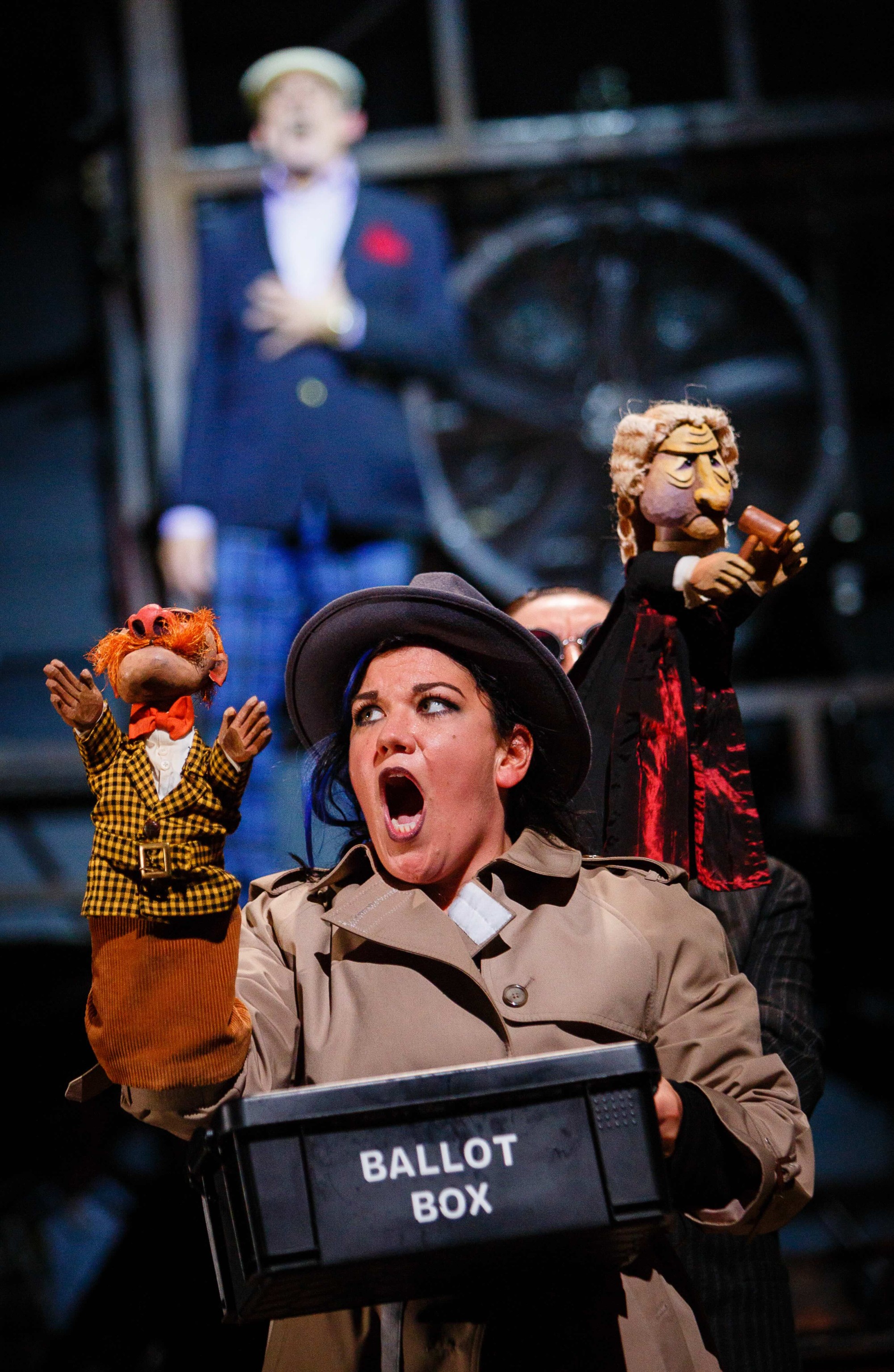
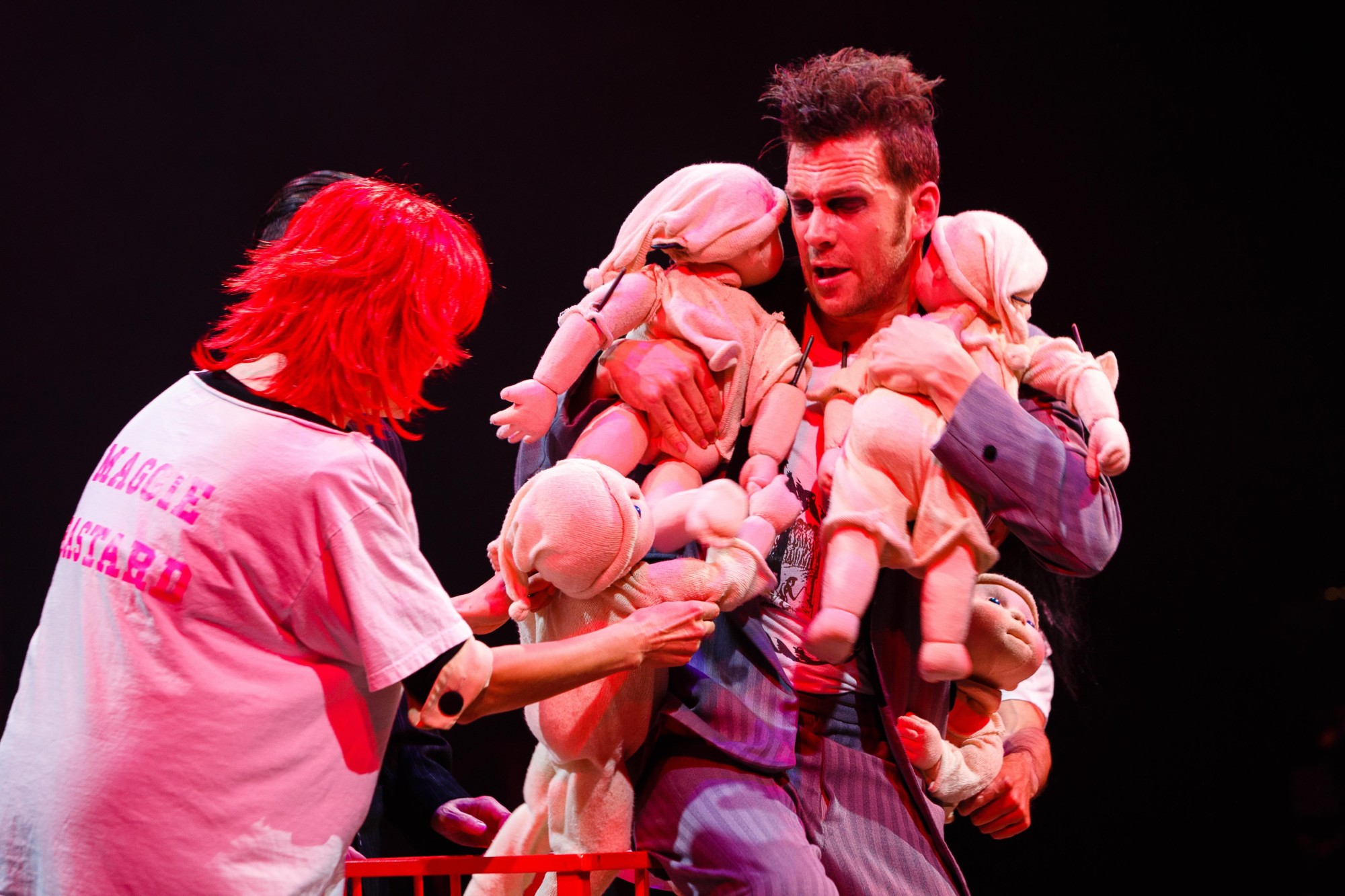
Puppets can communicate archetypes very effectively. In Dead Dog in a Suitcase, puppets were used to represent a range of themes and characters:
The dog = innocence
Babies = consequences of careless love
Glove puppets = political parody, politicians as being puppets of other masters
Giant dog = destruction.
Stories, myths and texts
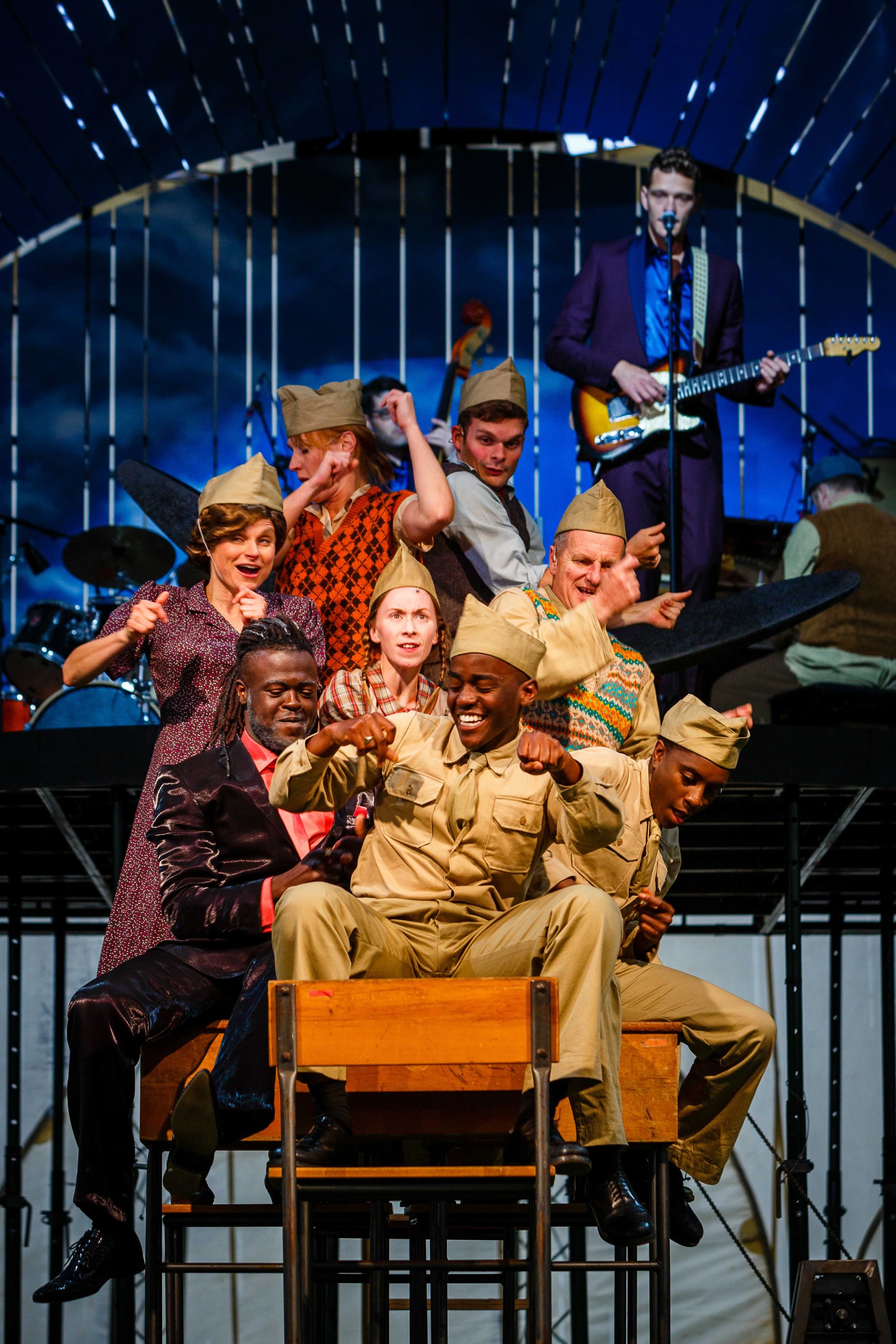
Whatever story is your source text, remember it’s a starting point! Any story can be told from different perspectives. All texts silence some characters who might need a chance to tell their side of the story! Kneehigh’s playfulness means that no text is revered or put on a pedestal: whether it’s a fairy story or a play by Shakespeare, there’s always room for naughtiness and playfulness.
With the writer or writers, we talk and dream, we map out the structure and the overall shape of the piece. They go away and write collections of poems or lyrics or ideas. Each writer works in a different way but what none of them do is to write a script or a scene in isolation.
I find Ladybird books quite useful! Simple books which give you the structure and the story, but they also give you lots of opportunity to open the story up without being consumed by 125 pages of script.
Writing
In the Studio 11: Stories and Images
Anna Maria Murphy wrote a number of plays with and for Kneehigh. In this video by Brett Harvey The Secret Writer, you can hear about some of her inspiration and methods.
Anna provides a number of starting points for writing in the tasks below:
Stories and Images
- What story are you burning to tell?
- Make a list of subjects and stories that have been on your mind for a while.
- Then make a list of images (Think filmically) that go with those ideas.
- Invent titles. Sometimes I don’t know what the full story is, but still invent a title, e.g: ‘Roger Salmon, A Cornish Detective’. That title gave me a starting point for the disparate stories that I wanted to tell, and I then knew that the structure would be Roger Salmon investigating them.
Emma commissioned both me and Carl (Grose) for Tristan and Yseult, writing a series of poems and dialogues, rather than a full script. She said, “Anna, I want you to write the voice of the unloved and the tragic lovers and Carl the voice of the court”, which was in iambic pentameter. I wrote for the Love Spotters and Whitehands and Brangian, and Carl wrote King Mark and Frocin. Sometimes we overlapped. My references for that included a lot of film references that Emma had, but there was also the scandal about Monica Lewinsky and Bill Clinton happening, so I wrote about the corridors of power.
In the Studio 12: Making a scrapbook
Make a scrap book of images, words, music, colours, scrawled ideas around your spark of an idea/theme. They are great ways to start a process and then share visually with others.
You could make individual ones, or as a group of collaborators, make a few pages each and make one great almighty scrapbook!
In the Studio 13: The Miss Hibbs method
Anna Maria Murphy suggests more ideas to help you, inspired by Cornwall teacher, Miss Hibbs, whose technique of breaking down stories to basic headlines underpins much of the devising process for Kneehigh’s work:
Miss Hibbs used to break stories down with her young people into a number of chapter headings or headlines. She would encourage you to tell the story in as few headlines as possible i.e 5 or 7 or maybe 9. (she would like it to be an odd number!) Then Miss Hibbs would get her class to choose one headline or story point and just write about that. It is an excellent way of understanding structure and keeping things simple and energised.
Practise Task
Take a well known fairy or folk tale, e.g.: Red Riding Hood or The Three Little Pigs. In a group decide among you the main points of the story, then tell the whole story is 5 tabloid headlines.
These are your “scenes” if you like. Once you have these, you can play around with the order. In Tristan and Yseult we started the play at the end, went full circle, then back to the end again. Be playful with your structure and storytelling.
Then write the themes of the story, as many as you can: i.e. adventure, hunger, danger etc. However many you have generated, then reduce them to just three. Write these three in large letters somewhere, as they will be the beating heart of your story, and keep returning to them. From this , make your own storyboard, both useful for film, theatre, dance, design, music etc.
We would do this at the start of any Kneehigh creative process.
At the risk of seeming over-simplistic I always remember Miss Hibbs even when approaching something as dense as Gunther Grass’s Tin Drum or Shakespeare’s Cymbeline. It helps me understand narrative structure.
Task: Write a 50 word story of your idea/story or practice with a well known story, or a story that you particularly love, It can be anything from Romeo and Juliet, Noughts and Crosses, Little Women, etc. The process helps to get to the very meat of the story.
I try to write the bits that come easily first, like the best bits: the bits that feel like they're already almost there. I'll tackle the bits that I can already see. That's quite a good way of playing around with what the story is. You think, “let's try this bit in the middle, and let's try the ending, and then let's try this other idea”. Then you have five minutes of material to start you off.
In discussions and workshops, we end up with bits of paper taped, like big PostIt Notes™. Each bit of paper might be particular images that we like, or a key moment of the show or story. For example, there's going to be a butterfly that lands on a flower, because that symbolises how lost she's feeling. You've got all those things, and then you're placing them in different orders. So that kind of level of detail and just sitting at the laptop isn't from the beginning. The point where you’re sitting at the laptop is when you've got your bits of paper. You’re asking “What is the journey of the characters? What are the scenes that might happen?
Games and Warm Ups
When rehearsing at the Barns, members of Kneehigh would often use a run across the cliffs as a physical warm up! Physical exercise elevates the collective energy of the group and increases stamina. Find a variety of different ways to incorporate playfulness to your warm-ups, and take collective responsibility for leading them.
In the Studio 14: Finding the Wonder: Keepy Uppy
Place one A3-sized piece of paper at one end of the rehearsal space. This is your ‘goal’. Next, take another piece of A3 paper and scrunch it into a ball. Divide your ensemble into groups. This could be anything from pairs upwards but the smaller the group, the harder the task!
One by one, each team stands at the other end of the room to the goal. A referee throws the paperball upwards, and between them, the team must keep the ball airborne until it hits the goal. Each player can only touch the ball once before someone else must take their turn, using similar moves to volleyball. If the ball lands on the floor at any other place than the goal, they must begin again from the start.
The teams who are not in active play should watch the game unfold, looking for moments of wonder - those moments that inspire awe and excitement in an audience. They can be moments of tension, moments of frustration and humour, interesting groupings as people work out the best tactic for the game and even ideas for characters. It’s also a great source of ideas for choreography for chase sequences, escapees or lovers running to or from something!
A simple game of ‘keepy uppy’ can really help alertness, awareness of the group, sharpen antennae, focus and build ensemble. A good theatre show needs a good team actively practicing these qualities. Know where your teammates are, know where the focus is and always know what the story is otherwise the ball will run into touch.
In the Studio 15: The Game With No Rules
Mark out a playing area. Divide into two teams, with everyone else acting as the spectators. Imagine this is the final of a huge championship - the stakes couldn't be higher!
Each team has a set of objects to play with. Use whatever is available: chairs, beanbags, perhaps even a wildcard object like a potato.
Your challenge is to invent a game as you play it. There are no spoken rules. Instead, communicate through your actions. As the game unfolds, the rules will gradually emerge.
Keep playing until the spectators begin to understand the game. They'll let you know when someone makes a brilliant move, breaks an unspoken rule, or does something unexpected.
Eventually, discover the move that wins the game. You'll know the exercise is over when everyone agrees that someone has won!
In the Studio 16: What Are You Doing?
Ask your ensemble to stand in a circle. One person in the middle starts an action. The next person comes in and asks “what are you doing?” The original player can answer anything they like as long as it’s not what they are actually doing. The person coming in then does that action and the first person leaves… repeat.
Spectators actively watch improvisations, and ask “what did we like?”
Write down actions/scenes on big pieces of paper, randomly combine scenes, identify what’s missing, find the missing scene, find the ending. Generate these scenes quickly: see Keith Johnstone’s ‘Scenes in a Minute’, ‘Gifts’ and ‘Hat Game’ in his book Impro for Storytellers.
Write down scenes on individual postcards, shuffle the pack, look at the card and link scenes together. Find ways to incorporate scenes and create an ending.
In the Studio 17: Games and tasks for when you get stuck!
Many of Kneehigh’s most imaginative and theatrical moments have stemmed from task-based activities during rehearsals. You could, for example, set one or more of the following tasks:
- Create a costume for a character using random clothing in a dressing up box. Two people select and dress a third person who becomes the character
- Write a haiku to describe a character’s thoughts or emotions
- Improvise a journey through a landscape, using mime
- Invent a new game that can be played in your specific rehearsal space
- Go outside or to the props store or cupboard and find five things that represent the place in which your story is set or where the character inhabits.Bring them back and tell the story of each item.
- Choose an unfamiliar piece of music and dance to it
- Sketch a picture as if you were a character in your story
The outcome of each of these tasks is not fixed. Instead they are designed to free up the imagination. You may not use these ideas in your final piece, you might choose to discard them now or later, but their influence will be there somewhere!
I find that my brain works really well if I butterfly around an idea, and then I tend to land on something which isn't the thing itself, but it gives me a different map. It's what gives you a fresh view, and that personal map is what will make the piece unique.
Holding your nerve:
I think about it a lot in my work, which is that we're all scared all the time. Performing is a really scary thing to do, because you're not just scared, as we all are, but you're doing it in front of an audience that may or may not think you're any good, and have lots of ways of showing you that, whether it's reviews or clapping or leaving at the interval. So it's really, really scary. And then what happens when we're scared is, we hold on to what we think is our safe place. Of course, that safe place is useless to us as theatre makers, so you have to do a deal with yourself, which is, be scared. It's unavoidable, no amount of controlling or asking questions or buying time is going to get you out of that scary place so you might as well jump into it. We’d ask ourselves ‘What's the worst that can happen?’ And if the answer wasn't ‘death’, we'd have a go at anything.