Devising is hard, it needs improvisation skills which take time to develop, it needs a generosity and, somehow, a joy of creation. It seems to be increasingly hard to keep fear and anxiety at bay but …
Archive
-
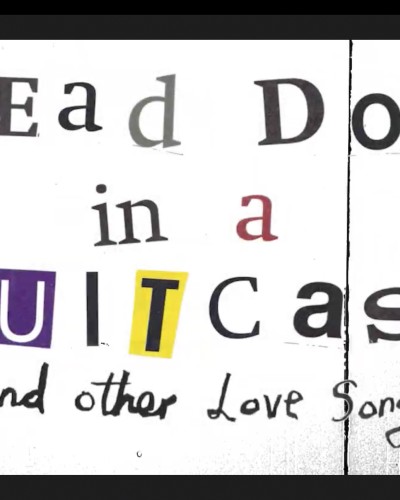
Extended Trailer Dead Dog in a Suitcase Extended Trailer -
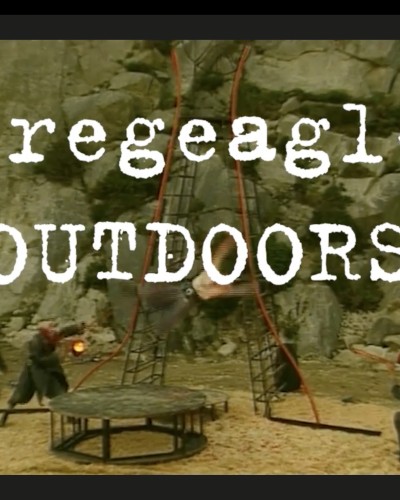
Extended Trailer Tregeagle Extended Trailer -
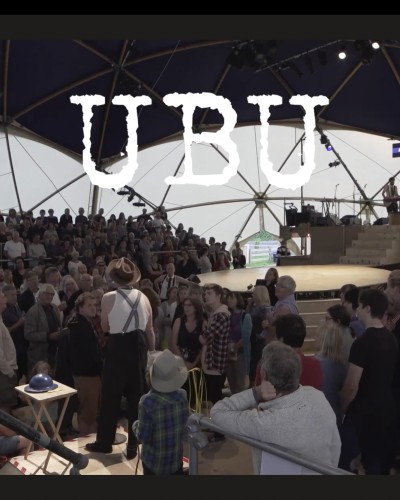
Extended Trailer Ubu Extended Trailer -
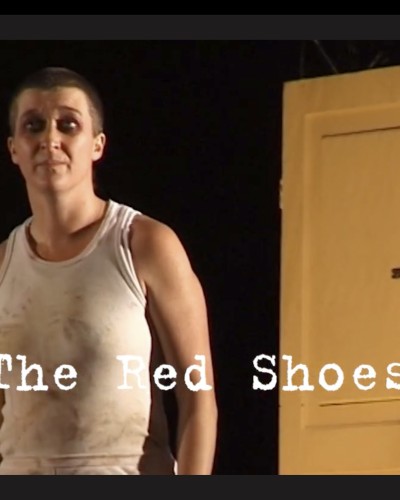
Extended Trailer The Red Shoes Extended Trailer -

Extended Trailer Tristan & Yseult Extended Trailer -
Extended Trailer Kneehigh Highlights Reel -
-
Don’t labour your ideas. Ideas come easy and Emma always said that bad ones (ideas) usually take care of themselves (by dropping away). Be brave. Be present and respond. Be intellectual when you need …
-
When you're devising, you are going to create a fair bit of chaos.
-
We talked a lot about archetypes, which is where mask work would come in: through masks you could distill an archetype. Then the real detail of that work was to do contra-archetype, so you could show …
-
With the writer or writers, we talk and dream, we map out the structure and the overall shape of the piece. They go away and write collections of poems or lyrics or ideas. Each writer works in a …
-
I find Ladybird books quite useful! Simple books which give you the structure and the story, but they also give you lots of opportunity to open the story up without being consumed by 125 pages of …
-
Emma commissioned both me and Carl (Grose) for Tristan & Yseult, writing a series of poems and dialogues, rather than a full script. She said, “Anna, I want you to write the voice of the unloved …
-
At the risk of seeming over-simplistic I always remember Miss Hibbs even when approaching something as dense as Gunther Grass’s Tin Drum or Shakespeare’s Cymbeline. It helps me understand narrative …
-
I try to write the bits that come easily first, like the best bits: the bits that feel like they're already almost there. I'll tackle the bits that I can already see. That's quite a good way of …
-
In discussions and workshops, we end up with bits of paper taped, like big PostIt Notes™. Each bit of paper might be particular images that we like, or a key moment of the show or story. For example, …
-
You're absolutely in connection with your fellow colleagues and the audience. The storytelling takes people on a journey.
-
A simple game of ‘keepy uppy’ can really help alertness, awareness of the group, sharpen antennae, focus and build ensemble. A good theatre show needs a good team actively practicing these qualities. …
-
I find that my brain works really well if I butterfly around an idea, and then I tend to land on something which isn't the thing itself, but it gives me a different map. It's what gives you a fresh …
-
I think about it a lot in my work, which is that we're all scared all the time. Performing is a really scary thing to do, because you're not just scared, as we all are, but you're doing it in front …
-
A good way of storytelling is getting an audience on the edge of their seat going, “Oh my God, what's going on? What's going to happen next?”
-
You can’t rest on what you know, and you can't relax into research. You're sort of dancing at the edge of a precipice all the time, which is what Kneehigh felt like. Kneehigh do no research. There is …
-
I believe that once the body is energised and the blood is oxygenated then creativity comes to the fore.
-
If you're making a piece of theatre, you're asking the audience to engage their imagination anyway. A puppet is part of the imagined world created by the performance. A puppet guides our imagination …
1 / 21