Designing
Set
Bill (Mitchell) was a really great visual director, and his work was so visual. His designs weren’t just making sets for people to act in front of. They were playgrounds.
In the Studio 19: Inside Outside
Watch this video of Bill Mitchell talking about the differences between designing and directing for outdoor and indoor spaces. Notice the way in which the company adapted Tristan and Yseult design for the Cottesloe Theatre (now the Dorfman, at the National Theatre) after their success performing the play outside.
It might be tempting to sit down and design a set before trying out ideas as the performers start to put the story on its feet. However, for Kneehigh, the design process is integral from the beginning of rehearsals. As you rehearse, try out ideas and have items of set around you to play and experiment with.
We would try not to rehearse indoors too much, because if you stay indoors, you start talking your ideas out rather than doing them. Try and make the work on your feet.
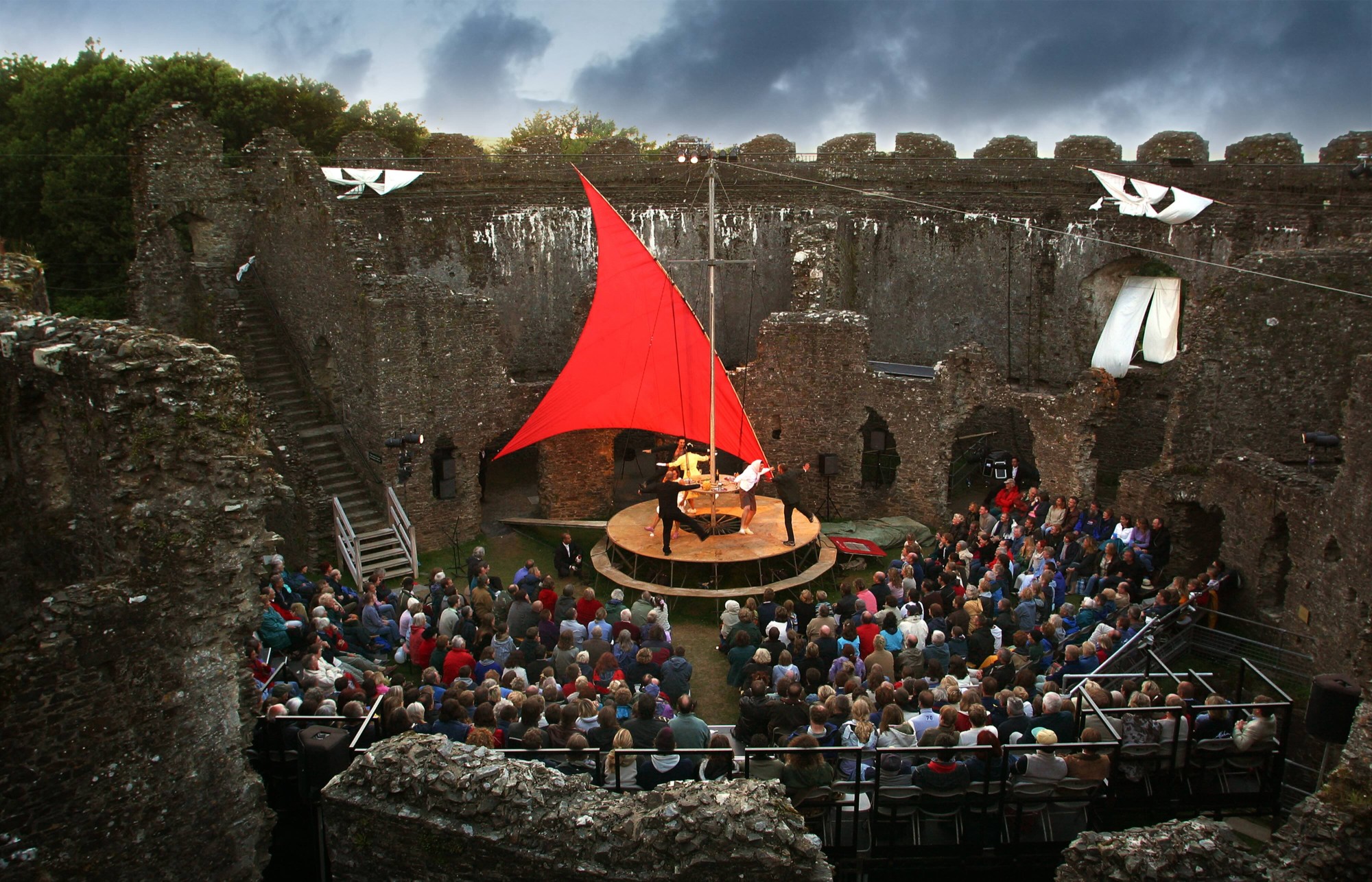
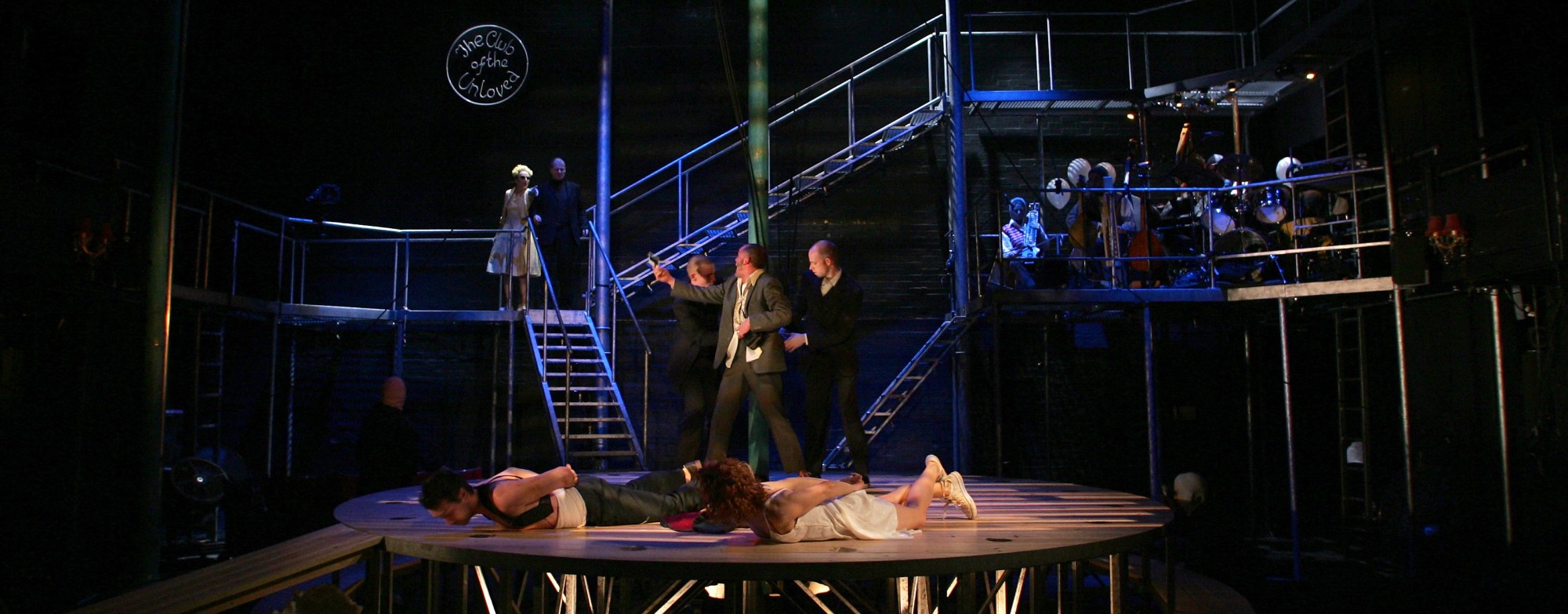
As Sue Hill states, it’s important that you take an active approach to creating a piece of theatre rather than spending too much time chatting!
By taking your rehearsals to a different rehearsal space (either indoor or outdoors), you’ll quickly identify what items of the set are vital, which can be temporary and which ones need to be on stage for the entire performance. Ensure that the lighting design is also taken into consideration when designing the set. Does your set allow for puppetry? Where will the performers be when they’re not acting? Quite often, all of the Kneehigh performers would remain on stage for the entire performance and so you’ll need somewhere for them to be that doesn’t pull focus away from the action.

Audiences are different outside. They become closer to you. You’re sharing the same space. You’re sharing the same view.
Kneehigh productions involve audience participation but it’s a very different style of interaction than you might see with styles such as pantomime. Instead, observe how characters break the fourth wall with monologues (The Red Shoes), enter through the auditorium (Tristan and Yseult’s Love Spotters) or sit amongst the audience (Brief Encounter). If you’re using a non-traditional performance space (either indoors or outdoors), how might you encourage your audience to move with you? In the outdoor show Ghost Nets, the Kneehigh performers found that the audience moved with them, ran after them and even ended up getting wet on the beach! A key question to ask is “how will we bring the audience with us?” With outdoor performance, dusk and night play a strong role. As darkness falls, emotion deepens and the relationship with the audience changes.
Costume
In the Studio 20: Costume
Task
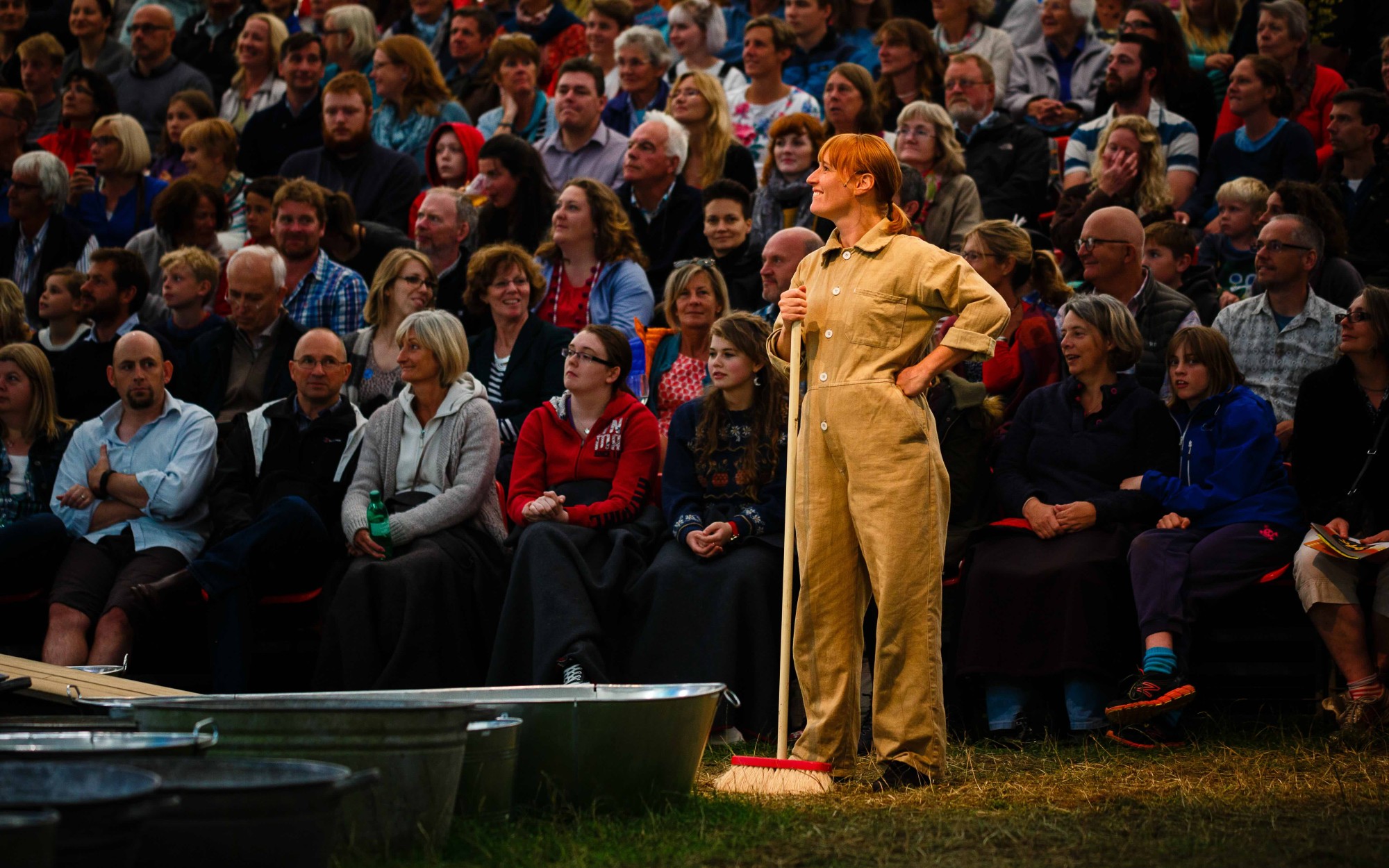
Costume ideas and decisions can come from playful tasks and activities. Find a range of different clothing items. Your challenge is to create a character using those clothes, BUT at least two of those items must be worn differently to the way in which they were originally designed to be worn. What happens when you wear trousers as sleeves, or you put your legs through the sleeves of a jumper?
Months before rehearsals begin, I start work with the creative team. We gaze at books and films, sketch and begin to form a concept; an environment in which the story can live, in which the actors can play. The physical world holds meaning and narrative, it is as much a storytelling tool as the written word.
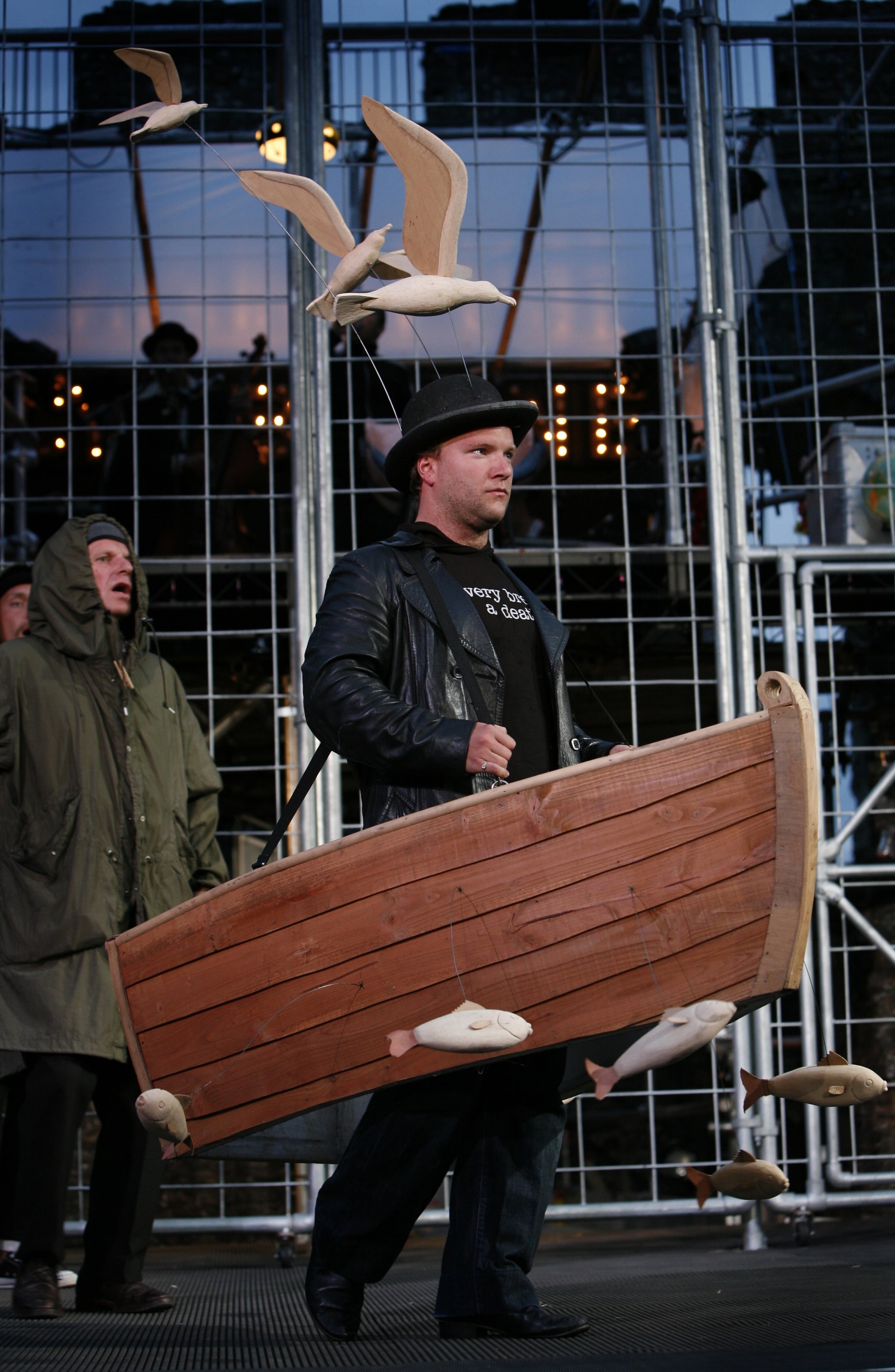
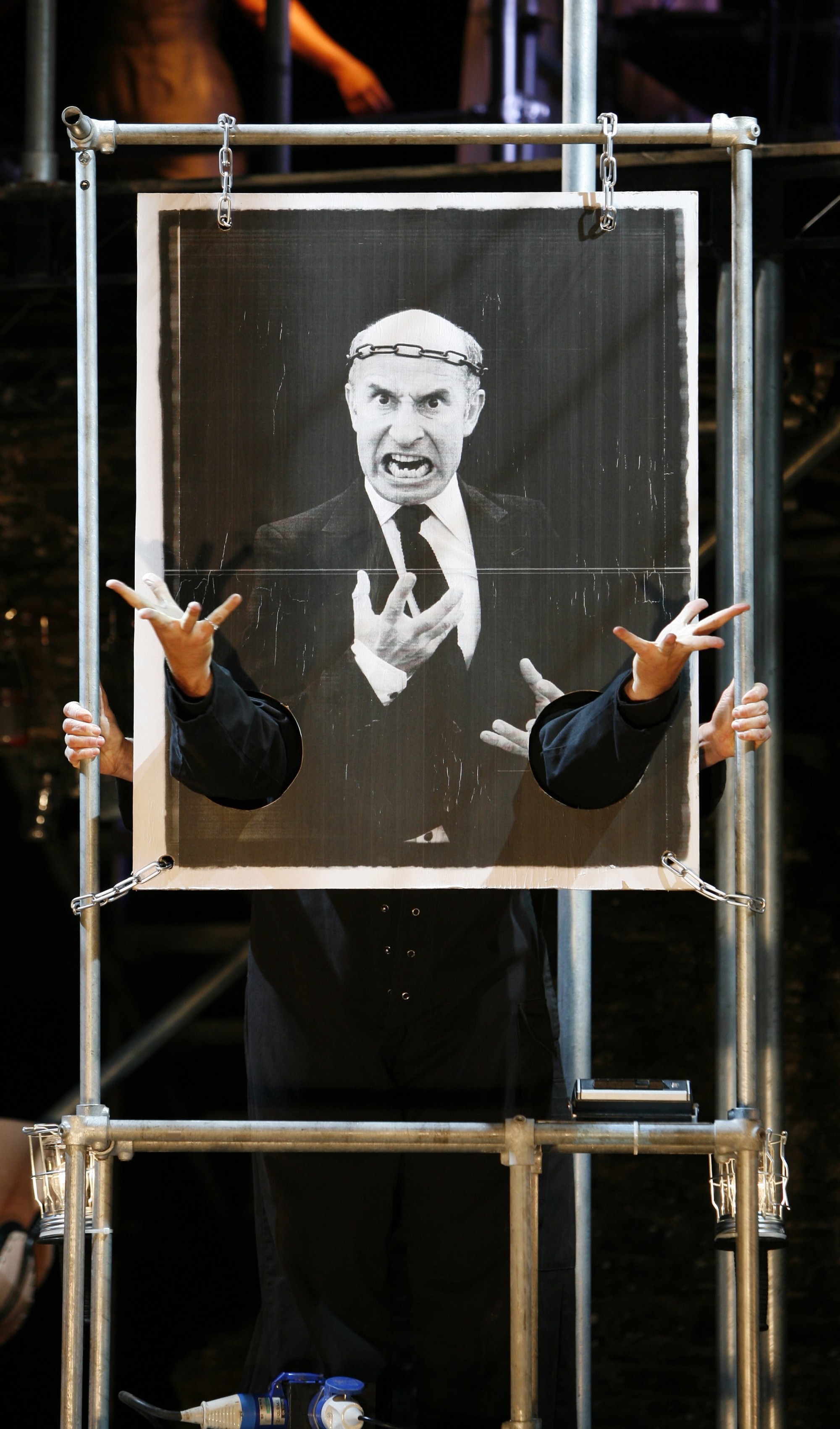
One way to gain an overview of design styles for Kneehigh production is to look at the trailers and videos associated with some of the productions across the years. For example:
Lighting
Malcom Rippeth would paint with light.
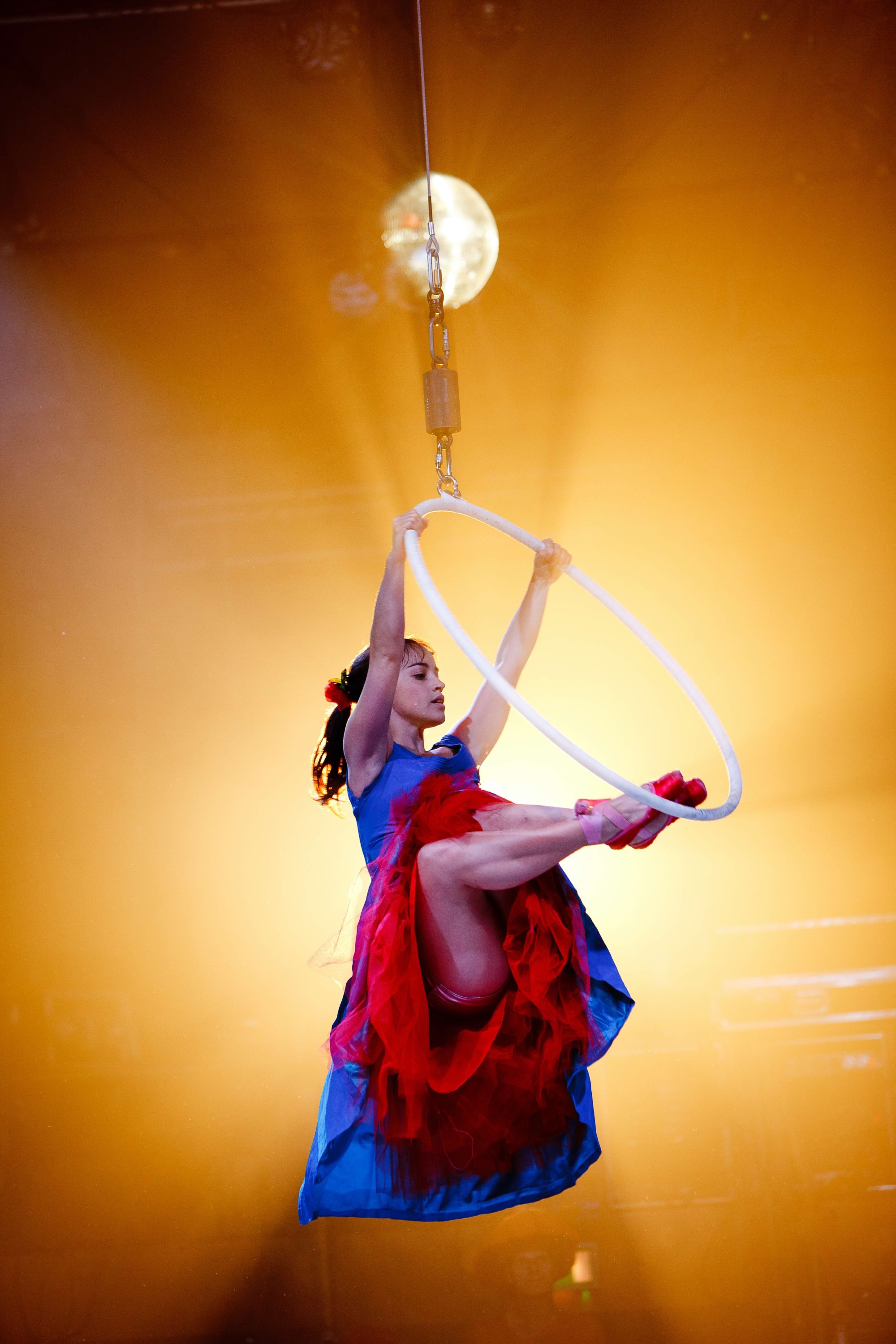
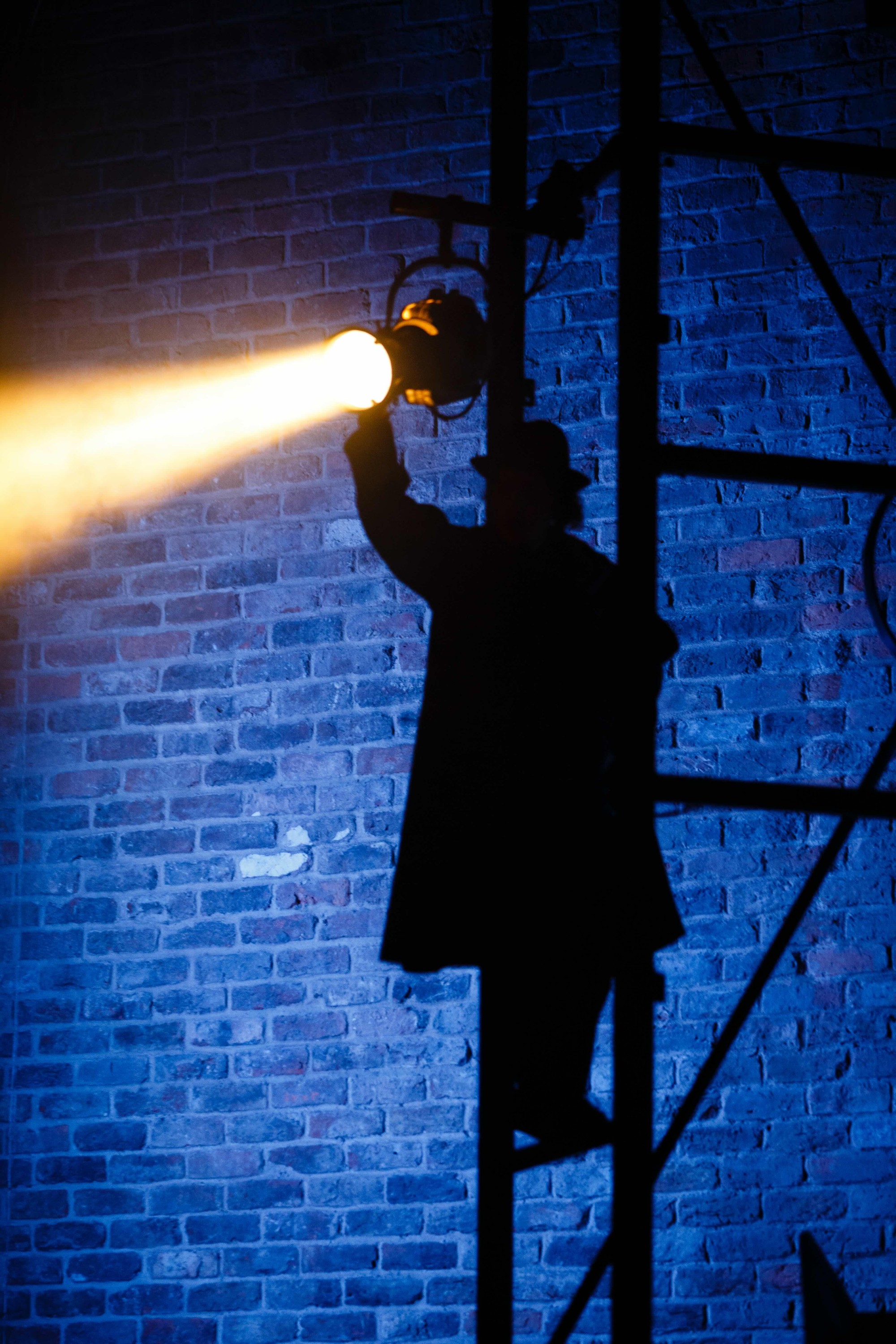
Like all of the other design elements, lighting would be considered right from the very beginning of the rehearsal process. Factors influencing the design would include:
- Venue. In the Asylum tent which was used in the summer, performances would start at 7.45pm but it wouldn’t be completely dark yet and so Malcolm Rippeth would need to use light differently to a theatre with the facility to create a complete blackout.
- Setting. In some Kneehigh productions, the set would not change throughout the entire play: it would be the lighting that created the different locations. For example, in Dead Dog in a Suitcase, the dirty backstreets would need to contrast with the Peachum boudoir, which used orange and blue light, and again with pink-toned nightclub style lights of the Slammerkin Club. Colour was fundamental in creating those different locations. Additional effects such as the use of haze can also be very effective in suggesting setting.
In 946 - The Amazing Story of Adolphus Tips, the lighting design had to be really dynamic in order to tell us where to look, to describe locations theatrically without naturalism, really defining situations on stage, whilst having an overall aesthetic that was more like a rock gig than most theatre shows.
- Time. Lighting suggests not only the time of day, but the time of the year. Moonlight, sunset, light glinting from snow, the reflective quality of the sea in mid-summer all create a very different mood and atmosphere. There is no need to attempt naturalism in these lighting states but instead we can be mindful of achieving very emotive storytelling.
- Light sources. It is worth experimenting with different light sources beyond relying on traditional theatre lights in a rig. In The Wild Bride, light bulbs were a source of light and imagery which held the audience’s focus at key moments. Consider using torches, battery-operated candles, lanterns and stage-safe paraffin-style lamps to create what Malcolm Rippeth calls “a magic toy shop world”.
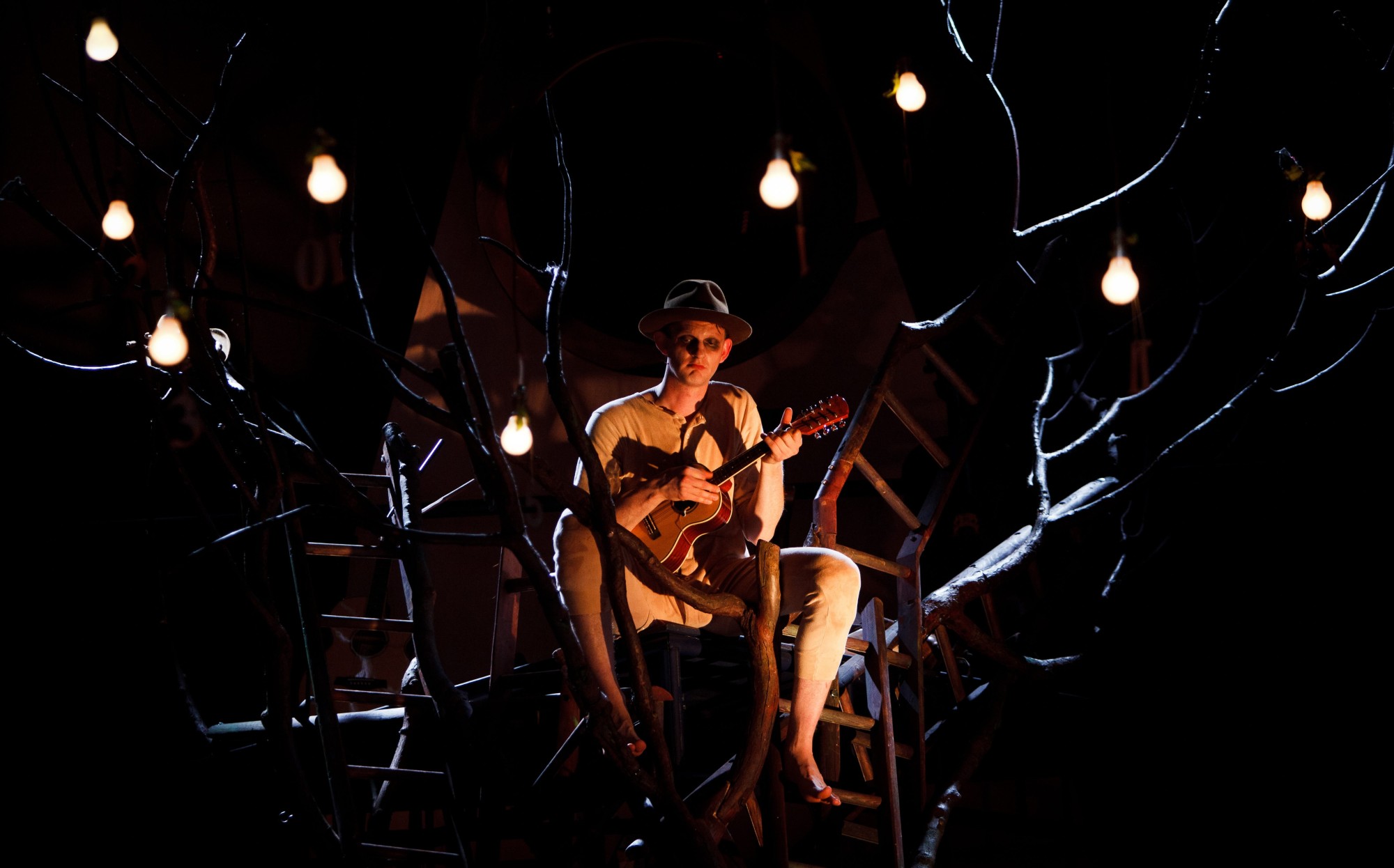
- Focus. Light (or lack of it) focuses the audience’s attention on a particular person or object on stage. If you’re performing in a fairly traditional performance venue, this can be straightforward but Kneehigh’s work outdoors means that lighting can’t always do all of the heavy lifting in ensuring that this happens. Make sure that your lighting designer, director and performers are all working towards the same point of focus in any given moment.
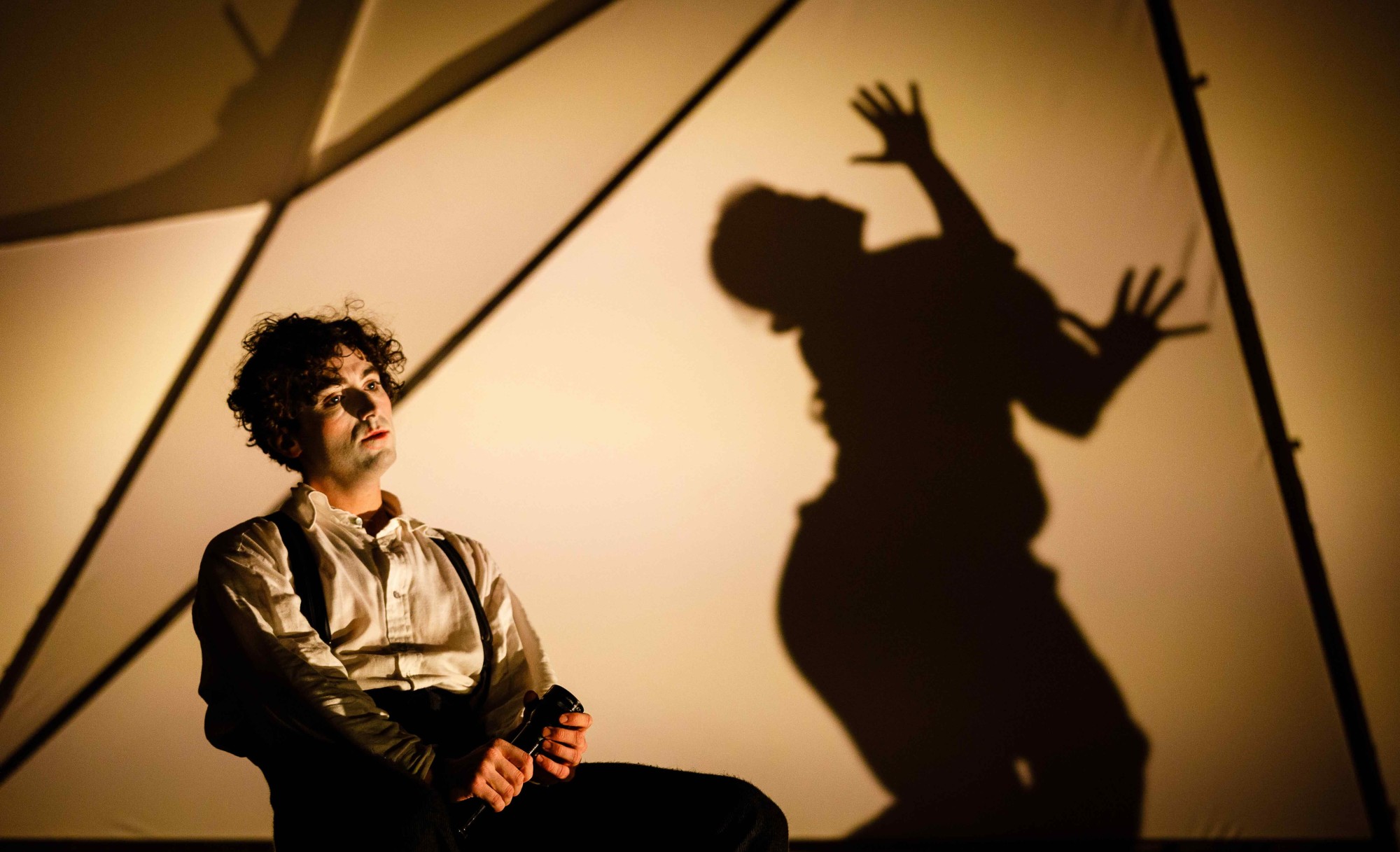
- Shadow. Use of shadow (and shadow puppetry) is an excellent storytelling technique, particularly when creating effects that are difficult to achieve convincingly (for example, the maiming of limbs in The Red Shoes or the witch being thrown into the oven in Hansel and Gretel. You’ll need to make sure that you have an appropriate surface through which to achieve that shadow imagery, and the space required to create it, so working closely with the set designer is crucial.
In The Flying Lovers of Vitebsk, light created magic.
I like to see the workings of theatre. I like there to be magic as well, where you don't know how that's happened, but I like to see the workings of it too.
Sound and music
You can find a Kneehigh playlist on Spotify: it’s called Kneehigh Legacy Playlist..
When we started thinking about the musical landscape of Steptoe and Son we knew we wanted to use music to not just locate us in time but also connect us in memory.
The influence of Kneehigh’s outdoor work can be seen in the sound design of their productions. Songs and instrumental music conveyed narrative, mood and atmosphere. Live musicians create a sense of community and celebration. You’ll see in a lot of the published Kneehigh scripts, the amount of text seems a lot less than other plays of a similar time length. However, when you consider the inclusion of music in the performances, it’s clear how powerful and important music is to Kneehigh’s style of performance.
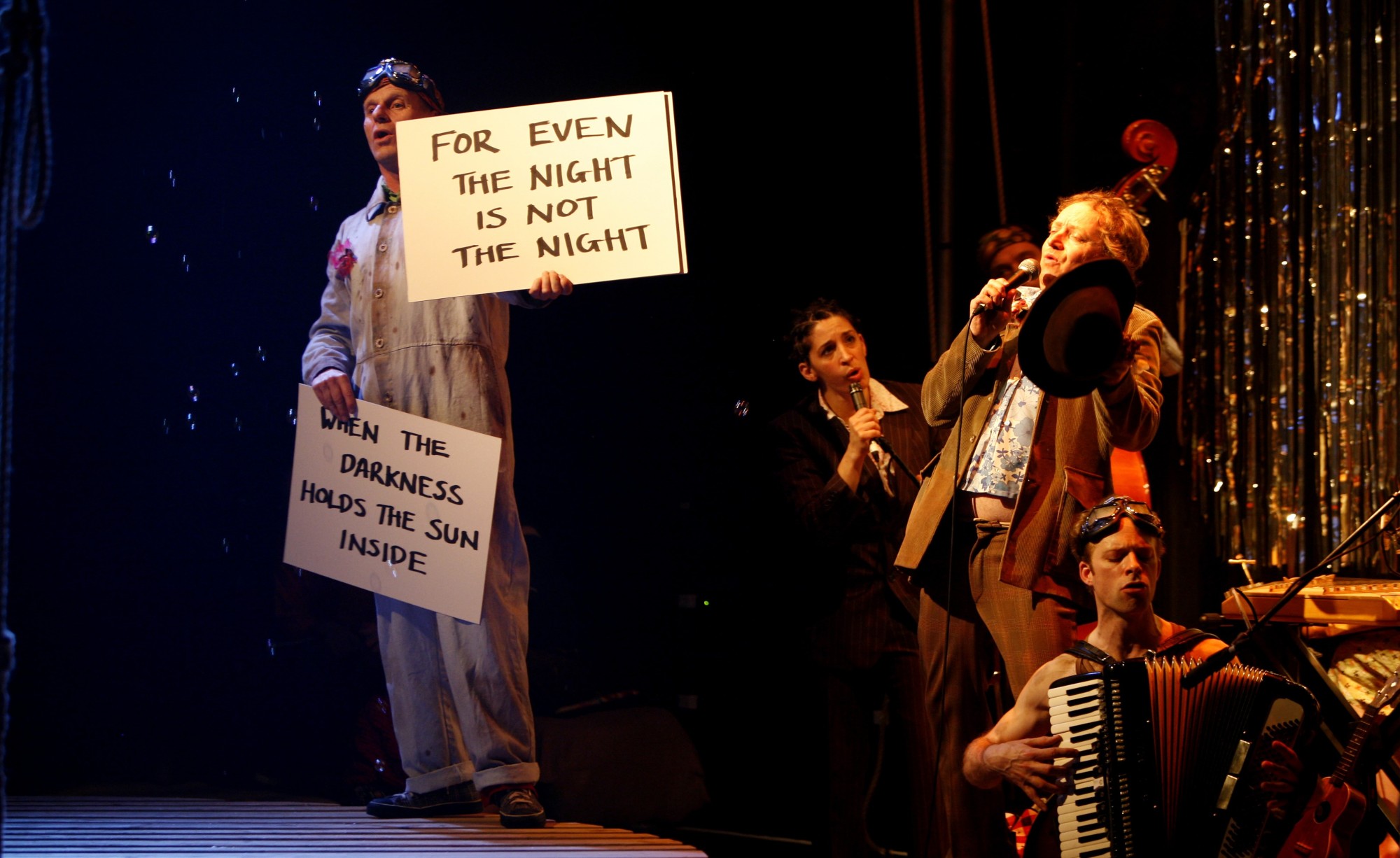
Live musicians bring an immediacy. It’s important to place the music and give it its full impact. I’m not keen on underscoring. A live band adds real power to the live storytelling. Much of Kneehigh’s work has been in epic spaces where dense dialogue is not appropriate. In a way we often work filmically where soundtrack leads the action and text is more minimal.
What’s unique about the Kneehigh process is that it’s about investment, ownership and generosity. The Barns was the thing for me, how isolated it was, how focused the work was and how the bubble of it came with you on tour around the world.
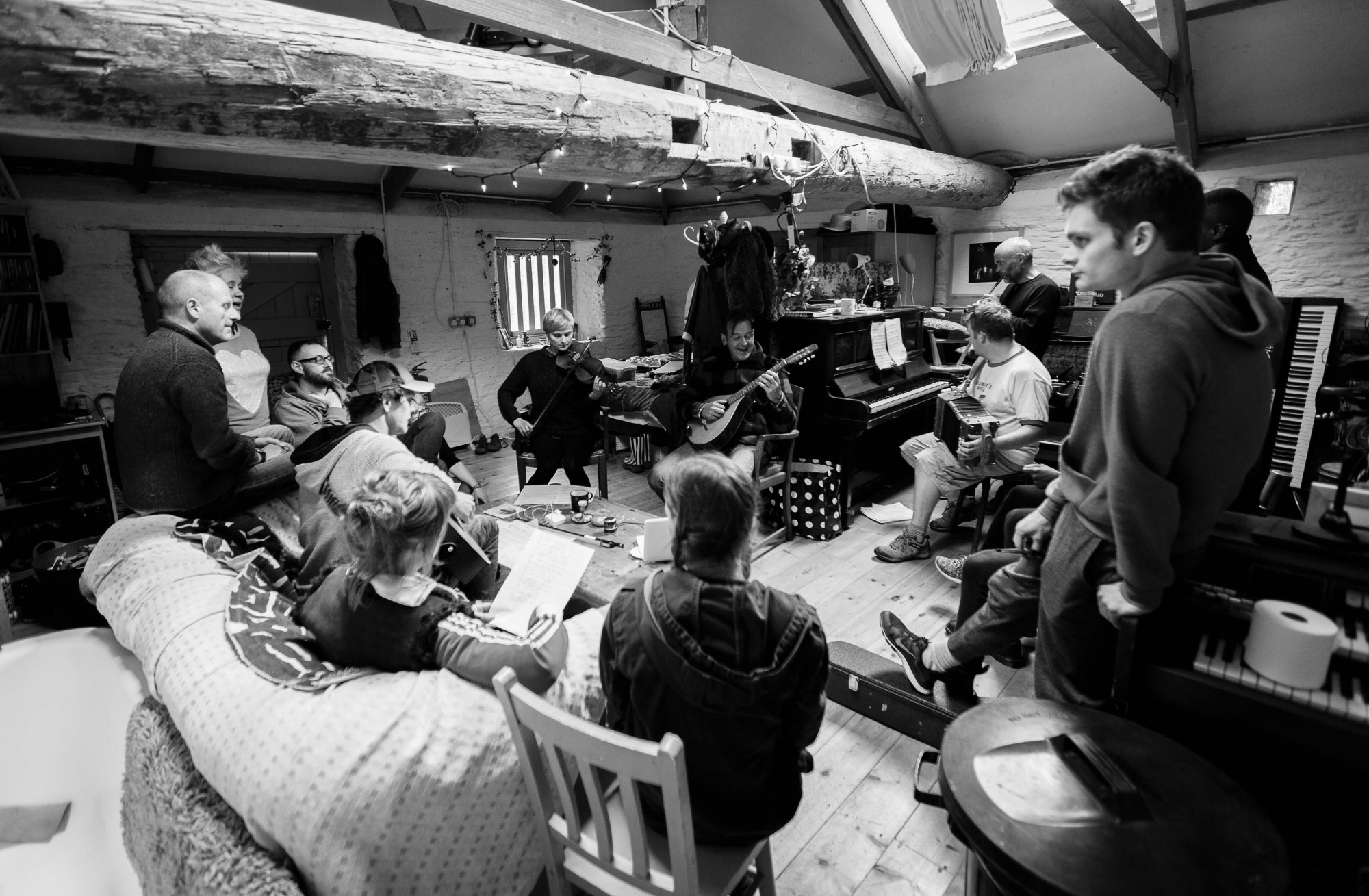
Kneehigh already had a kind of a template, which was like a way of telling stories with their bodies. It became even more important when you took that work outside, we found we could tell stories physically and with music: you still used words, but they weren't carrying the story. They weren't telling people things. You were showing people things, and the music became really important. And of course, Jim Carey was the kind of musician who would write these absolutely divine threads of music, which scored the shows. Quite quickly this kind of physical theatre form developed, which was taking the audience on an emotional journey through their eyes as much as through their ears. Then it became even more important. We started to do wild walks and take people on journeys.