Ideas are everywhere
Provocations and Inspirations
Kneehigh’s inspirations are eclectic, ever- changing and growing. They have included:
- Silent movies, particularly Buster Keaton and Charlie Chaplin, Laurel and Hardy and Harold Lloyd
- David Lynch
- Nina Simone
- Circus Archaos
- Quentin Tarantino
- Footsbarn
- Akram Khan
- Frida Kahlo
- Talking Heads and David Byrne
- Nick Cave
- Kae Tempest
- Wes Anderson
- William Kentridge
- Paula Rego
- Italo Calvino
- Jan Švankmajer
Resourcing your drama department
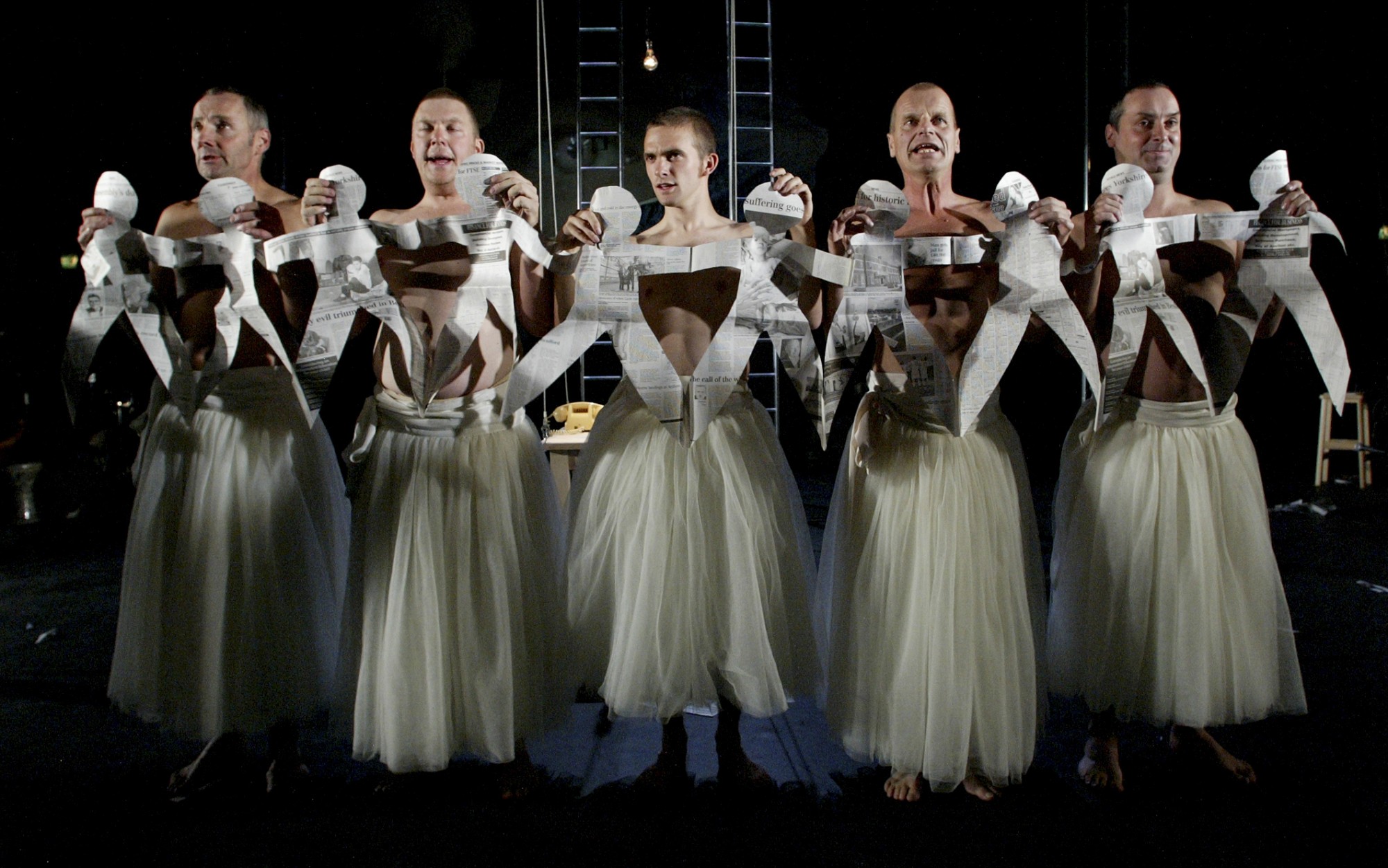
I'm a massive believer in dressing up. Always have been. I think everybody changes the minute they dress up, but you have to make sure that the clothes fit. Teachers need to find things that make people less body conscious. You need big, funny clothes because if you're asking people to lose their inhibitions, the last thing you want them to do is to try and squeeze into trousers that don't fit.
I always think trying to have a way of making a space dark is good because I think acting, creating and improvising is very exposing. If you can black out the windows and just have torches, that’s great. If you haven't got a lighting rig, you don't need it. You can have electric candles, you can have torches. You can have your iPhones on, you know, whatever you might have to see if you can take the edge off so that people don't feel exposed. I think that's 90% of what I do with actors.
I take the pressure off actors by playing music underneath what they're doing, which is encouraging them not to use words all the time, to work physically, to take it out of the face and into the body. Think about all the things that make you feel exposed: being yourself, being strongly lit, feeling like you have to fill a silence. Take all those fears away, and people will surprise you. And then once they're discovering things, then you can take away the crutches. I think normally people build the other way round: rehearse in raw daylight, and then put the lights down. Do it the other way around, rehearse in the dark, and then bring the lights up when people know what they're doing.
Scrapbooks and boxes
Many of the Kneehigh creative teams kept scrapbooks - for specific productions or as sources of inspiration. Keeping a ‘live’ scrapbook into which goes postcards, note about snippets of overheard conversations, photos from magazines or newspapers, Polaroid photos, images found online, extracts from text: there’s no wrong way to make a scrapbook. They become a handy tool for finding ideas, provoking thought and making connections between ideas.
Drama teachers might choose to create a generic box of ‘stuff’ - again, there’s no prescribed way to do this. It could be a paper based box file, it could be a larger box into which goes unusual items found, discarded or donated: anything which inspires a sense of play.
Both the scrapbook and the ‘stuff box’ don’t need to be costly - aim to avoid buying anything new.
Books, films, stories and music
- Italo Calvino: Italian Folktales. Penguin, 2000
- Brothers Grimm: The Complete Fairy Tales, Vintage, 2007
- Gabriel Garcia Marquez’s short stories
- Ladybird books
- The novels of Louis de Bermiers
- The films of Quentin Tarintino, David Lynch, Emir Kusterica, Roy Anderson, Yorgos Lanthimos, Jacques Tati, Monsieur Hulot and Jour de Fete
- Films and silent movies starring Charlie Chaplin, Buster Keaton, Laurel & Hardy, and the Marx Brothers
- Playlists curated by you and your students
- Stories for children and/or adults that you find in charity shops, or on explorations of bookshops
- The work of John Berger
- Plays by Brecht that have a political message that you can relate to
- Percussion instruments
- Old hymn books or books of songs sung in primary school
- Traditional folk tales from different areas in the UK
- Books and poems by Charles Causeley
- Tales from Shakespeare by Charles and Mary Lamb
- Impro: Improvisation and the Theatre and Impro for Storytellers by Keith Johnstone
Other resources available online
- Emma Rice’s Essay for BBC Radio 3 on theatre directing (2011)
- Interview about The Tin Drum with Carl Grose, Mike Shepherd and Charles Hazlewood
- Mike Shepherd talks through his scrapbook for Dead Dog in a Suitcase
- Mike Shepherd describes his rehearsal process and talks about games and how to use them in rehearsal.
- Anna Maria Murphy describes writing Tristan and Yseult
- Bill Mitchell talks about his work with Kneehigh, and his work in theatre
- A sneak peak at 946: The Amazing Story of Adolphus Tips, adapted from the book by Michael Morpurgo.