In the Studio 10 Exploring archetypes and archetypal symbols
Task
You’ll need two six-sided dice. Firstly, each person rolls both dice to be allocated a character archetype. For example, if you roll an 8 you are a magician. If you already have a character with that number, roll again to avoid doubling up characters.
Then, one person in the group rolls ONE die, to select an archetypal plot. Rolling a 5, for example, would create a revenge-based plot.
Improvise that plot line - perhaps select some appropriate music on a streaming platform such as Spotify to accompany your improvisation to create some atmosphere!
During this improvisation, you are not aiming for a perfect story or performance. Instead, you are looking for moments of wonder where there are opportunities for magical storytelling. You’re likely to find those moments where the archetypes are in opposition with each other, perhaps in a struggle for power or status.
As you explore the story, take care to create the setting for your audience through your physicality. If it’s a journey you’re creating, make the physical struggle real! In fact, you could even take your audience with you on the quest!
Once you’ve achieved as much as possible from the improvisation, choose moments to expand and develop. You might like to give your character a theme song that suits them, create a physical sequence in which they show off their strength for example. The key word in this task is PLAY.
Added design challenge: Archetypal symbols
Archetypes also include symbols. For example, Spring can be an image of rebirth and regeneration. Water often represents redemption or rebirth. If you’re working with designers, ask them to watch your improvisation and provide some rough sketches of symbols that might support the narrative.
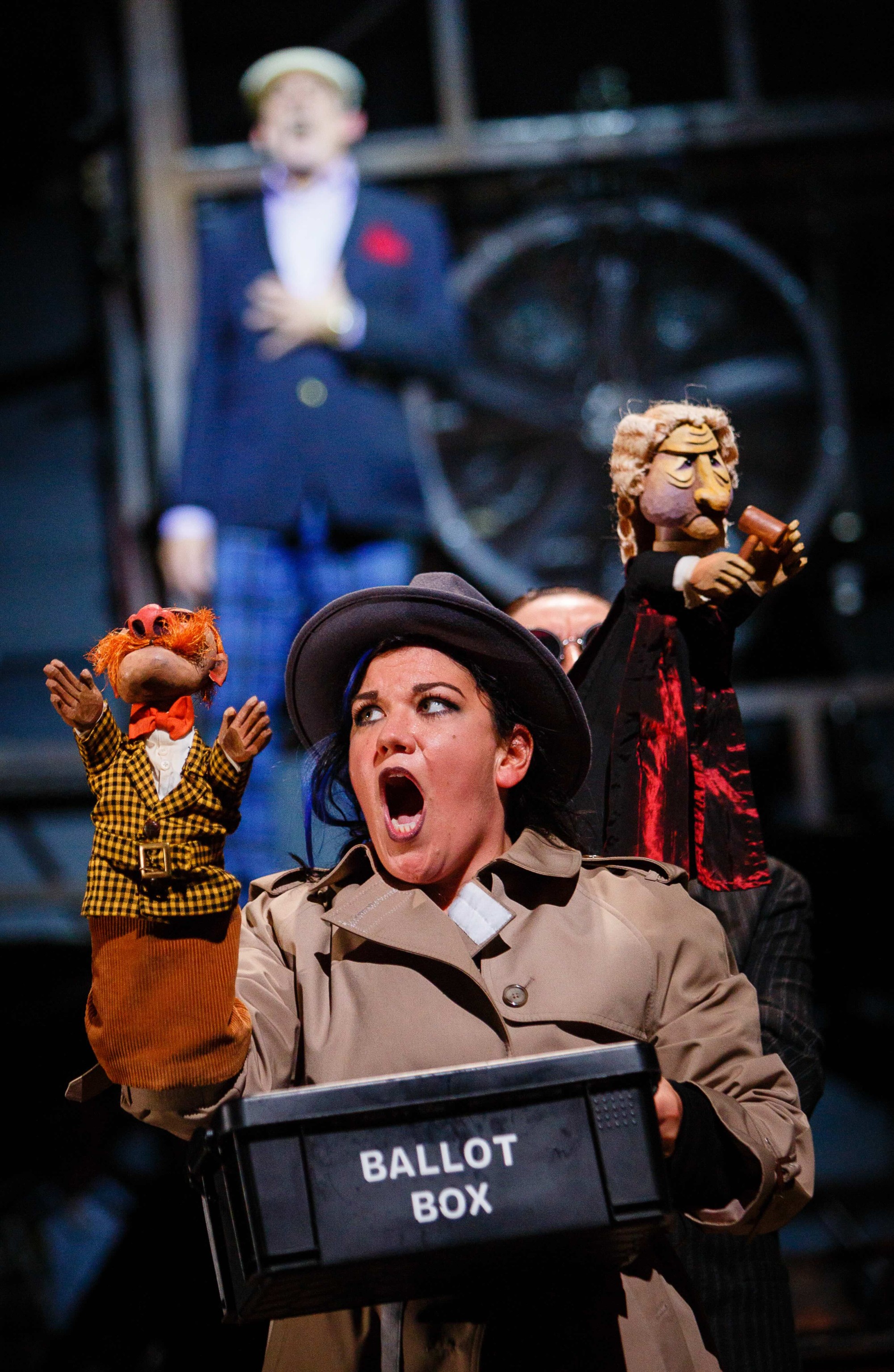
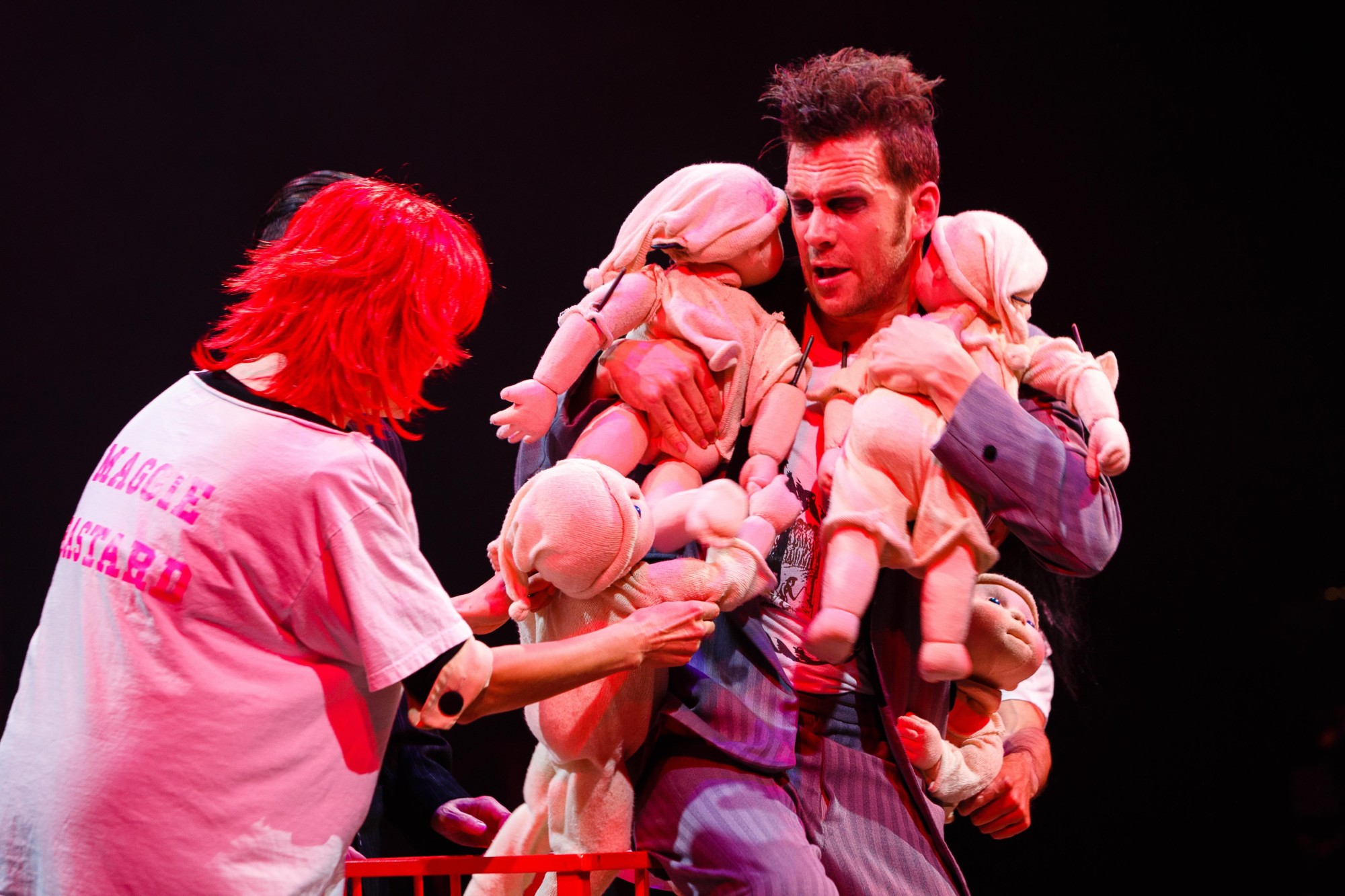
Puppets can communicate archetypes very effectively. In Dead Dog in a Suitcase, puppets were used to represent a range of themes and characters:
The dog = innocence
Babies = consequences of careless love
Glove puppets = political parody, politicians as being puppets of other masters
Giant dog = destruction.