 Emma Rice
Performer
Emma Rice
Performer
Quotes
"In village halls, you can’t pretend to be someone else. You have to talk directly to the audience, you have to engage with the tea urn, you have to engage with the children and the grannies and make it an event, a celebration. The Guardian 21st March 2005"
"We talked a lot about archetypes, which is where mask work would come in: through masks you could distill an archetype. Then the real detail of that work was to do contra- archetype, so you could show a victim and a bully at the same time, for example."
"With the writer or writers, we talk and dream, we map out the structure and the overall shape of the piece. They go away and write collections of poems or lyrics or ideas. Each writer works in a different way but what none of them do is to write a script or a scene in isolation."
"I find that my brain works really well if I butterfly around an idea, and then I tend to land on something which isn't the thing itself, but it gives me a different map. It's what gives you a fresh view, and that personal map is what will make the piece unique."
"I think about it a lot in my work, which is that we're all scared all the time. Performing is a really scary thing to do, because you're not just scared, as we all are, but you're doing it in front of an audience that may or may not think you're any good, and have lots of ways of showing you that, whether it's reviews or clapping or leaving at the interval. So it's really, really scary. And then what happens when we're scared is, we hold on to what we think is our safe place. Of course, that safe place is useless to us as theatre makers, so you have to do a deal with yourself, which is, be scared. It's unavoidable, no amount of controlling or asking questions or buying time is going to get you out of that scary place so you might as well jump into it. We’d ask ourselves ‘What's the worst that can happen?’ And if the answer wasn't ‘death’, we'd have a go at anything."
"You can’t rest on what you know, and you can't relax into research. You're sort of dancing at the edge of a precipice all the time, which is what Kneehigh felt like. Kneehigh do no research. There is no psychology. There is no discussion about why, or attempts to piece together any dots of a character’s background. As Nick Darke and Mike (Shepherd) always used to say, everybody's capable of everything."
"Months before rehearsals begin, I start work with the creative team. We gaze at books and films, sketch and begin to form a concept; an environment in which the story can live, in which the actors can play. The physical world holds meaning and narrative, it is as much a storytelling tool as the written word."
"At the time, I was really inspired by Bruno Bettelheim’s book, The Uses of Enchantment (1976). He was a Holocaust survivor, and he had a thesis - which has now been discredited - that fairy stories are therapeutic: we tell them, and they come to us at times when we need them. I was interested in the trauma that Bruno Bettelheim had felt in the camps, and the thought that stories might actually be plugging into something really dark. I felt that The Red Shoes was really dark, and my process and my mind was much less formed than it is now, but in many ways, it was all the richer for it. But I knew that I wanted all the storytellers to have shaved heads, and I knew that I wanted them in underwear, and I knew that I wanted them in clogs, and I knew that I wanted my storyteller to be this amazing drag queen, Lady Lydia…. and that underneath she was the same: that the wig would come off and there'd be a shaved head underneath."
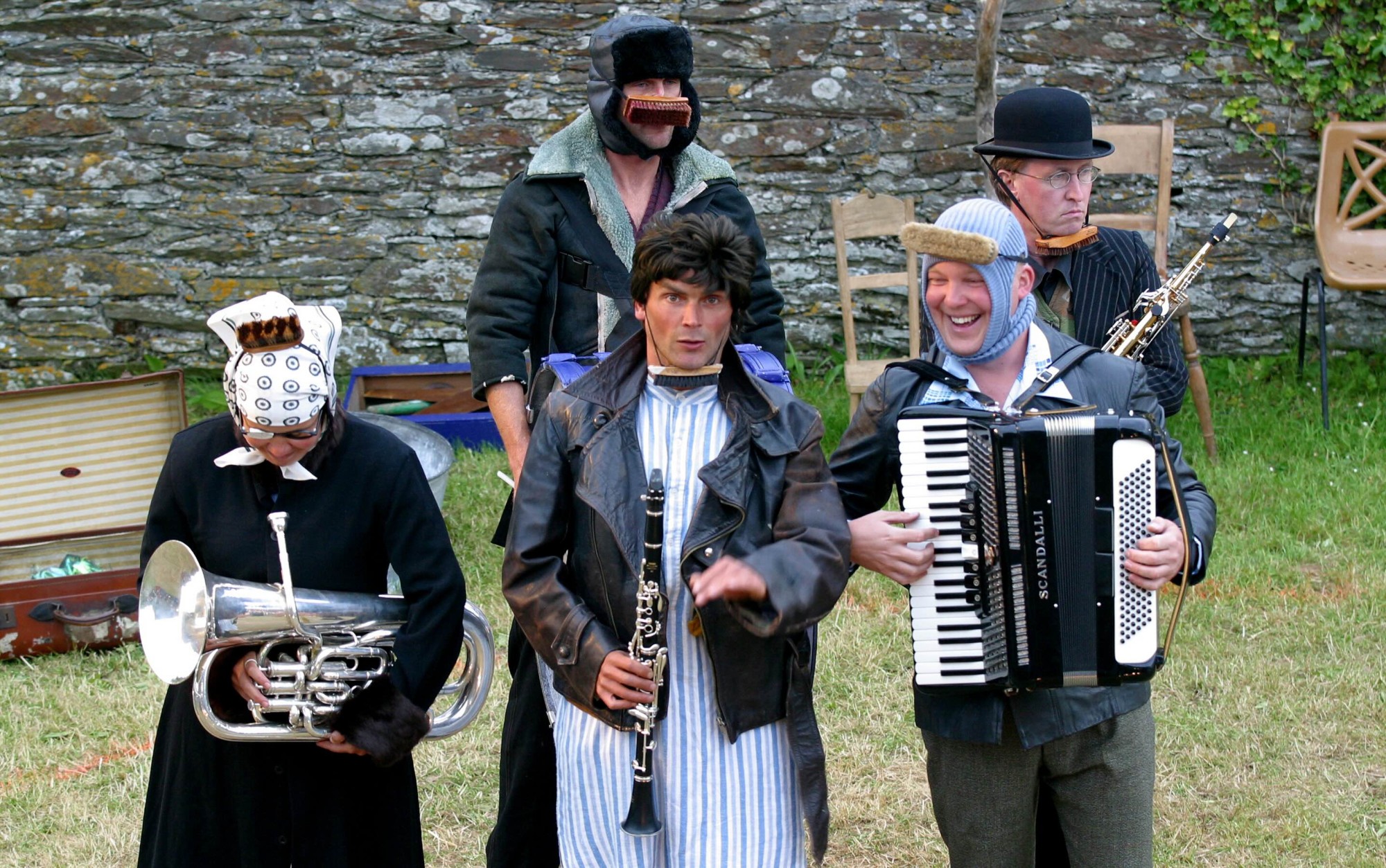
"I just thought, I wonder what happens if the Chorus are like bird watchers but they’re looking at love? I remember suggesting everybody put on a funny balaclava and anoraks and start looking for signs of love, and I swear by that point, there was only three weeks of rehearsals left to go and I've never seen a room take off like that: those Kneehigh clowns, their love spotters were a thing of absolutely, unstoppable, instinctive wonder and that never, ever changed."
"I always work around an idea. If you know you love it, that's in the bank. Think round it. What does it make you think of? What were the things that were swirling around in your mind? With Brief Encounter I spent the first weeks reading Noel Coward's poetry. I was finding out about these bawdy songs that he was writing, getting my brain completely spinning with this amazing material and that was when I thought, ‘I'm going to put these songs into it’.
Much of my work and life had been inspired and informed by folk tales. I realised really early on that I felt Laura was like a Selkie and in one of the Selkie stories that she was like the seal woman. She absolutely loved her husband, but actually was not in her natural environment which, of course, is such an amazing feminist, ancient trope to explore. So again, I did what I often do - I just laid the Selkie story across the top. That's where a lot of the film images came in such as the film of her underwater: that was where she was at her happiest and most natural. She finds herself in this seemingly happy world, but can barely breathe in it. I loved that it told me which poems to use.
"
"I'm a massive believer in dressing up. Always have been. I think everybody changes the minute they dress up, but you have to make sure that the clothes fit. Teachers need to find things that make people less body conscious. You need big, funny clothes because if you're asking people to lose their inhibitions, the last thing you want them to do is to try and squeeze into trousers that don't fit.
I always think trying to have a way of making a space dark is good because I think acting, creating and improvising is very exposing. If you can black out the windows and just have torches, that’s great. If you haven't got a lighting rig, you don't need it. You can have electric candles, you can have torches. You can have your iPhones on, you know, whatever you might have to see if you can take the edge off so that people don't feel exposed. I think that's 90% of what I do with actors.
I take the pressure off actors by playing music underneath what they're doing, which is encouraging them not to use words all the time, to work physically, to take it out of the face and into the body. Think about all the things that make you feel exposed: being yourself, being strongly lit, feeling like you have to fill a silence. Take all those fears away, and people will surprise you. And then once they're discovering things, then you can take away the crutches. I think normally people build the other way round: rehearse in raw daylight, and then put the lights down. Do it the other way around, rehearse in the dark, and then bring the lights up when people know what they're doing.
"